







Home Page | Photos | Video | Forum | Most Popular | Special Reports | Biz China Weekly
Make Us Your Home Page
Most Searched: CPC  South China Sea  Belt and Road Initiative  AIIB  RMB  

Arbitral tribunal's decision against China illegal: LatAm experts

Source: Xinhua   2016-07-13 15:41:22

BUENOS AIRES, July 12 (Xinhua) -- The award issued by the Arbitral Tribunal in the South China Sea arbitration case is "illegal," and the territorial dispute must be resolved through bilateral dialogue, many Latin American experts have said.

Gustavo Girado, head of the Buenos Aires-based Asia & Argentina Consultancy, told Xinhua recently that "first of all, one major question that must be resolved is how this tribunal can establish an opinion over sovereignty matter in maritime spaces."

"It seems that the Philippines was driven to go to an inadequate institution like the PCA, while going against previous agreements with China, by foreign forces that have a vested stake in the dispute. This has led to a military scaling-up in the region," he said.

Judicial expert Paola de Simone told Xinhua that the PCA's award in favor of the Philippines could hamper future efforts to resolve the dispute through bilateral negotiation.

For her, the Philippines "violated its commitment" as part of the Declaration on the Conduct of Parties in the South China Sea.

Arbitration by uninvolved third parties is "an excessive instrument," as "bilateral dialogue" must always be an option, Simone said.

Echoing their views, Evandro Carvalho, a professor of international law at the Getulio Vargas Foundation in Rio de Janeiro, said "it would be very difficult for a nation to admit the jurisdiction of an international tribunal on such a matter."

According to Carvalho, it is the basic rule of international law that allows China to explicitly reject the arbitration process initiated unilaterally by the Philippines.

The expert urged the Philippines to reconsider its action, saying that the complexity of the South China Sea issue deserves a diplomatic solution instead of seeking extra-judicial resolutions.

For Ulises Granados, coordinator of Asia-Pacific Studies at the Autonomous Technology Institute of Mexico (ITAM), the award "does not have much weight."

"In terms of procedure, as long as China has not submitted to the decision of the court, nothing will happen. There will be no consequences from the award," he said.

Granados believed that the arrival of the new Philippine President Rodrigo Duterte opens up a new chance for dialogue.

"It is clear that acting only through a judicial path will not force China to do anything at all," the Granados said.

Related:

China says ADIZ in South China Sea depends on threat

BEIJING, July 13 (Xinhua) -- China said on Wednesday that it will decide whether to declare an Air Defense Identification Zone (ADIZ) in the South China Sea in accordance with the extent of threat.

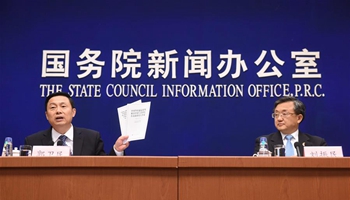
 "The ADIZ is not a Chinese invention, but rather that of some big powers. If our security were threatened, of course we have the right. It depends on our comprehensive judgment," said Vice Foreign Minister Liu Zhenmin at a press briefing at the Information Office of the State Council.  Full story

Editor: Hou Qiang
Related News
           
Photos  >>
Video  >>
  Special Reports  >>
Xinhuanet

Arbitral tribunal's decision against China illegal: LatAm experts

Source: Xinhua 2016-07-13 15:41:22
[Editor: huaxia]

BUENOS AIRES, July 12 (Xinhua) -- The award issued by the Arbitral Tribunal in the South China Sea arbitration case is "illegal," and the territorial dispute must be resolved through bilateral dialogue, many Latin American experts have said.

Gustavo Girado, head of the Buenos Aires-based Asia & Argentina Consultancy, told Xinhua recently that "first of all, one major question that must be resolved is how this tribunal can establish an opinion over sovereignty matter in maritime spaces."

"It seems that the Philippines was driven to go to an inadequate institution like the PCA, while going against previous agreements with China, by foreign forces that have a vested stake in the dispute. This has led to a military scaling-up in the region," he said.

Judicial expert Paola de Simone told Xinhua that the PCA's award in favor of the Philippines could hamper future efforts to resolve the dispute through bilateral negotiation.

For her, the Philippines "violated its commitment" as part of the Declaration on the Conduct of Parties in the South China Sea.

Arbitration by uninvolved third parties is "an excessive instrument," as "bilateral dialogue" must always be an option, Simone said.

Echoing their views, Evandro Carvalho, a professor of international law at the Getulio Vargas Foundation in Rio de Janeiro, said "it would be very difficult for a nation to admit the jurisdiction of an international tribunal on such a matter."

According to Carvalho, it is the basic rule of international law that allows China to explicitly reject the arbitration process initiated unilaterally by the Philippines.

The expert urged the Philippines to reconsider its action, saying that the complexity of the South China Sea issue deserves a diplomatic solution instead of seeking extra-judicial resolutions.

For Ulises Granados, coordinator of Asia-Pacific Studies at the Autonomous Technology Institute of Mexico (ITAM), the award "does not have much weight."

"In terms of procedure, as long as China has not submitted to the decision of the court, nothing will happen. There will be no consequences from the award," he said.

Granados believed that the arrival of the new Philippine President Rodrigo Duterte opens up a new chance for dialogue.

"It is clear that acting only through a judicial path will not force China to do anything at all," the Granados said.

Related:

China says ADIZ in South China Sea depends on threat

BEIJING, July 13 (Xinhua) -- China said on Wednesday that it will decide whether to declare an Air Defense Identification Zone (ADIZ) in the South China Sea in accordance with the extent of threat.

 "The ADIZ is not a Chinese invention, but rather that of some big powers. If our security were threatened, of course we have the right. It depends on our comprehensive judgment," said Vice Foreign Minister Liu Zhenmin at a press briefing at the Information Office of the State Council.  Full story

[Editor: huaxia]
010020070750000000000000011100001355100391