Why are Danes happiest people in the world?
                 Source: Xinhua | 2017-03-04 14:53:04 | Editor: huaxia

By Ru Ge

Danes are reportedly the happiest people in the world. As a curious Chinese exchange student at Copenhagen University, I wanted to explore some of their secrets to happiness, and have been mingling with Danish people and experiencing Danish culture on a first-hand basis. As time went on, I discovered a few reasons behind Denmark having the highest "happiness quota" in the world.

The Little Mermaid.(Xinhua/Shi Shouhe)

First and foremost, Denmark has an advanced social safety net to ensure the welfare of its citizens. If people are unable to work due to sickness or other reasons, the Danish government will pay them a fairly decent amount of money monthly, even if their spouses are wealthy enough to support them. In addition, universities are tuition-free and students receive monthly government allowances (two bachelor students at Copenhagen University told me that they each receive 5,500 Danish kroner monthly from the government). In addition to that, pregnant mothers enjoy six months paid leave for each child, and senior citizens who are older than 67 are given adequate pensions. Even though they have to pay a relatively high rate of tax compared to other countries, the safety net designed by the government is so secure that almost no one has to worry about their future.

Andersen's fairy tales come to China. (Xinhua/Su Yang)

Secondly, there is a concept in Denmark called the Law of Jante. This is a set of ideas that Scandinavians hold to, which place an emphasis on collective good and social solidarity over individual achievements. Because of this, there's not much of a competitive atmosphere within Denmark. People don't compare themselves with others or compete against each other most of the time. For example, if one student is from a prestigious university and the other one is from a lesser counterpart, there are no real differences between them in the Danish mindset. Danes think university is just a place for study, and there is no strong concept of ranking in Denmark.

At school, professors are not allowed to single out higher achieving students for praise, and they wouldn' t criticize lower achieving students. Everyone is equal and all are encouraged by teachers despite their academic performance. Another result of this mentality is the lack of an obvious social hierarchy in Denmark. Professors and students often drink beer together and chat, and even service people like electricians maintain equal footing with their boss. This egalitarianism helps create a harmonious society.

Thirdly, Danes strike an appropriate balance between work and relaxation. Danis schools start at 9 a.m. end at 2 or 3 p.m. Because of this, students have ample free time to pursue their hobbies and socialize with their friends. Their extra curricular activities are diverse and their lives are colorful. Life is not stressful those who are already employed. On average, each Danish person works for 37 hours a week and has 40 days of vacation per year. Working extra hours is not encouraged, so Danes are rarely stress out.
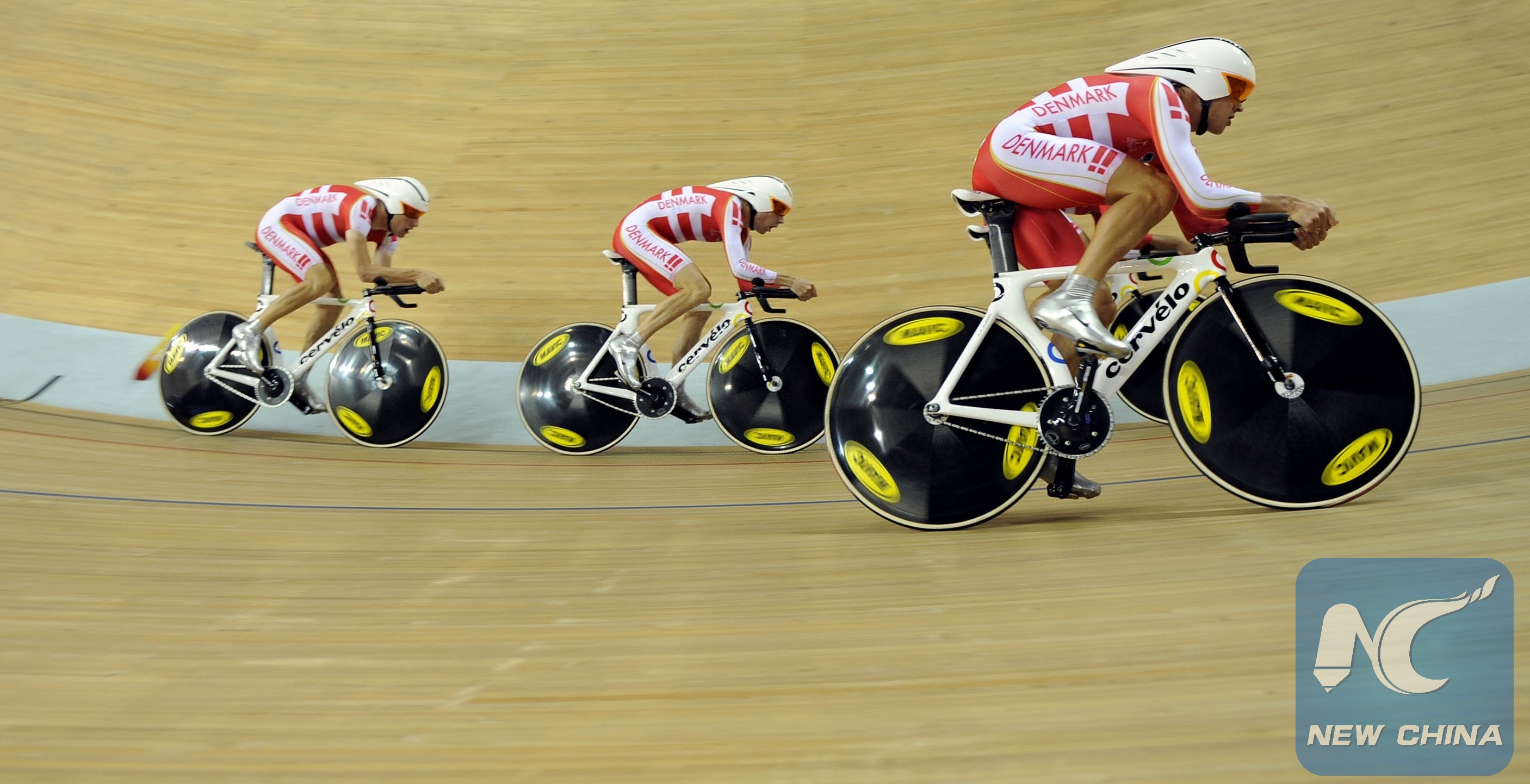
Danish cyclists at the Olympics. (Xinhua/Zhang Duo)

Fourthly, Danish society is quite liberal and tolerant. No one has to hide their quirks, uniqueness, or identity, and all are free to live as they wish.

Fifthly, Danish food sold in the supermarket is quite safe due to high safety standards. There are no worries about food safety in the country.

Finally, the air in Denmark is fresh and clear of pollution. Danes have ample opportunity to exercise outdoors, which allows for a great quality of life.

Back to Top Close
Xinhuanet

Why are Danes happiest people in the world?

Source: Xinhua 2017-03-04 14:53:04

By Ru Ge

Danes are reportedly the happiest people in the world. As a curious Chinese exchange student at Copenhagen University, I wanted to explore some of their secrets to happiness, and have been mingling with Danish people and experiencing Danish culture on a first-hand basis. As time went on, I discovered a few reasons behind Denmark having the highest "happiness quota" in the world.

The Little Mermaid.(Xinhua/Shi Shouhe)

First and foremost, Denmark has an advanced social safety net to ensure the welfare of its citizens. If people are unable to work due to sickness or other reasons, the Danish government will pay them a fairly decent amount of money monthly, even if their spouses are wealthy enough to support them. In addition, universities are tuition-free and students receive monthly government allowances (two bachelor students at Copenhagen University told me that they each receive 5,500 Danish kroner monthly from the government). In addition to that, pregnant mothers enjoy six months paid leave for each child, and senior citizens who are older than 67 are given adequate pensions. Even though they have to pay a relatively high rate of tax compared to other countries, the safety net designed by the government is so secure that almost no one has to worry about their future.

Andersen's fairy tales come to China. (Xinhua/Su Yang)

Secondly, there is a concept in Denmark called the Law of Jante. This is a set of ideas that Scandinavians hold to, which place an emphasis on collective good and social solidarity over individual achievements. Because of this, there's not much of a competitive atmosphere within Denmark. People don't compare themselves with others or compete against each other most of the time. For example, if one student is from a prestigious university and the other one is from a lesser counterpart, there are no real differences between them in the Danish mindset. Danes think university is just a place for study, and there is no strong concept of ranking in Denmark.

At school, professors are not allowed to single out higher achieving students for praise, and they wouldn' t criticize lower achieving students. Everyone is equal and all are encouraged by teachers despite their academic performance. Another result of this mentality is the lack of an obvious social hierarchy in Denmark. Professors and students often drink beer together and chat, and even service people like electricians maintain equal footing with their boss. This egalitarianism helps create a harmonious society.

Thirdly, Danes strike an appropriate balance between work and relaxation. Danis schools start at 9 a.m. end at 2 or 3 p.m. Because of this, students have ample free time to pursue their hobbies and socialize with their friends. Their extra curricular activities are diverse and their lives are colorful. Life is not stressful those who are already employed. On average, each Danish person works for 37 hours a week and has 40 days of vacation per year. Working extra hours is not encouraged, so Danes are rarely stress out.

Danish cyclists at the Olympics. (Xinhua/Zhang Duo)

Fourthly, Danish society is quite liberal and tolerant. No one has to hide their quirks, uniqueness, or identity, and all are free to live as they wish.

Fifthly, Danish food sold in the supermarket is quite safe due to high safety standards. There are no worries about food safety in the country.

Finally, the air in Denmark is fresh and clear of pollution. Danes have ample opportunity to exercise outdoors, which allows for a great quality of life.

010020070750000000000000011100001361018211