Incense-maker passes on 150-year-old Arabic scent
                 Source: Xinhua | 2017-04-05 15:53:38 | Editor: huaxia

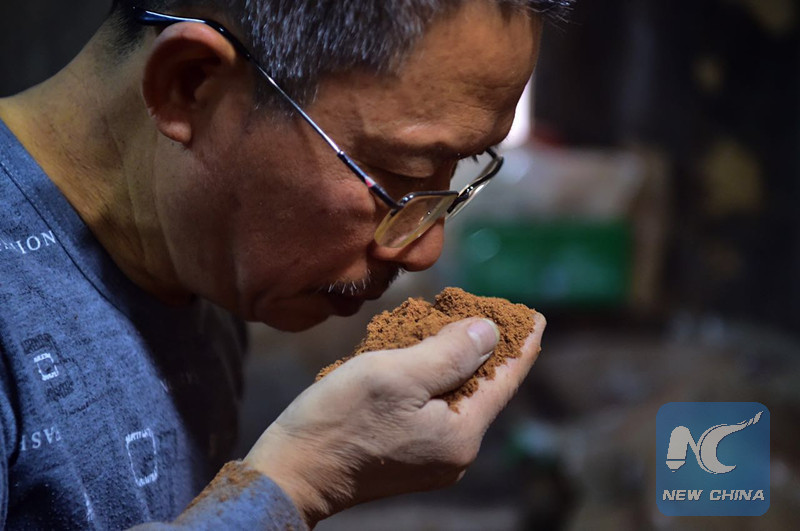
Incense-maker Pu Lianggong selects spices.

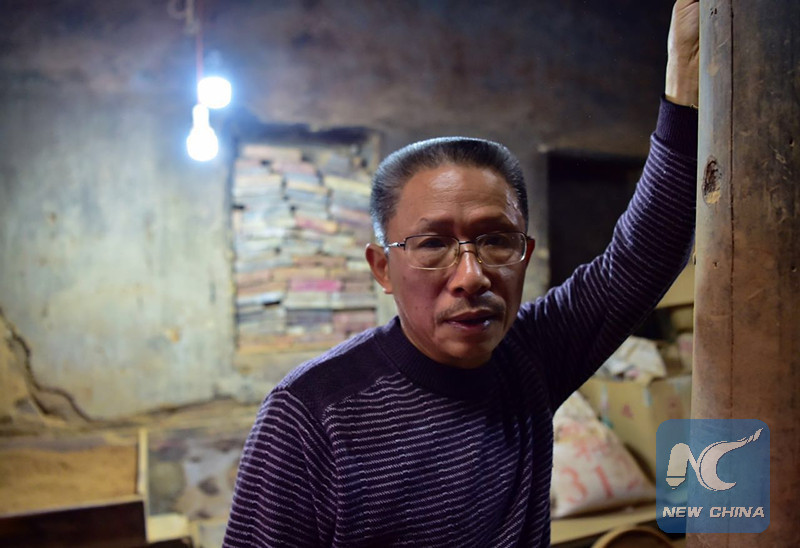
Pu Lianggong knows every bit of incense making -- a dozen steps and hundreds of spices -- just like his Arabian ancestors did about 150 years ago.

The 63-year-old is the tenth generation in an incense-making family of Arab descent in Quanzhou City, east China's Fujian Province. His spice merchant ancestors set sail from Arab and arrived at the Chinese port city, which is known as the starting point of the ancient maritime Silk Road, in around 1646. They settled down and made a living by selling spices.

Generation after generation, the Arabians gradually married local Chinese and began to adopt the Chinese surname Pu. About 150 years ago, the Pu family began to make incense using abundant bamboos there and spices from their homeland.

Despite its Arabic origin, Pu's incense is different from the scented chips called "bukhoor" in most Arab countries. Similar to Chinese stick incense, it is bamboo sticks wrapped by grinded spices.
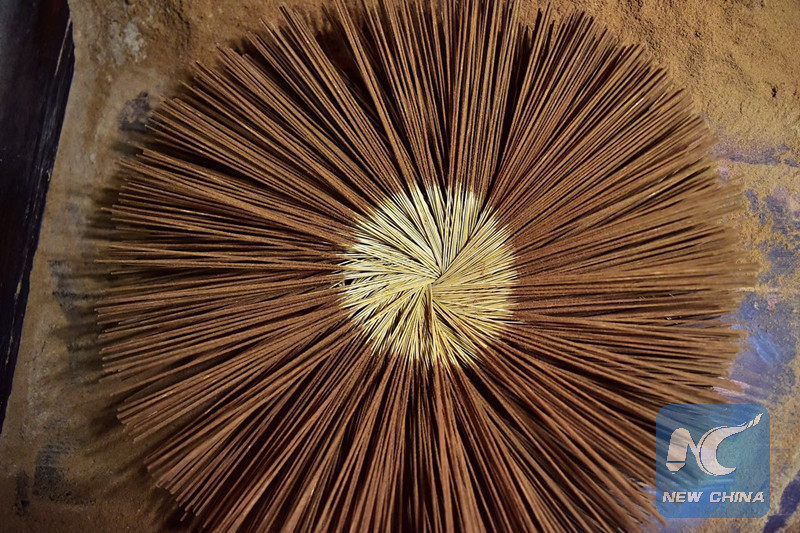
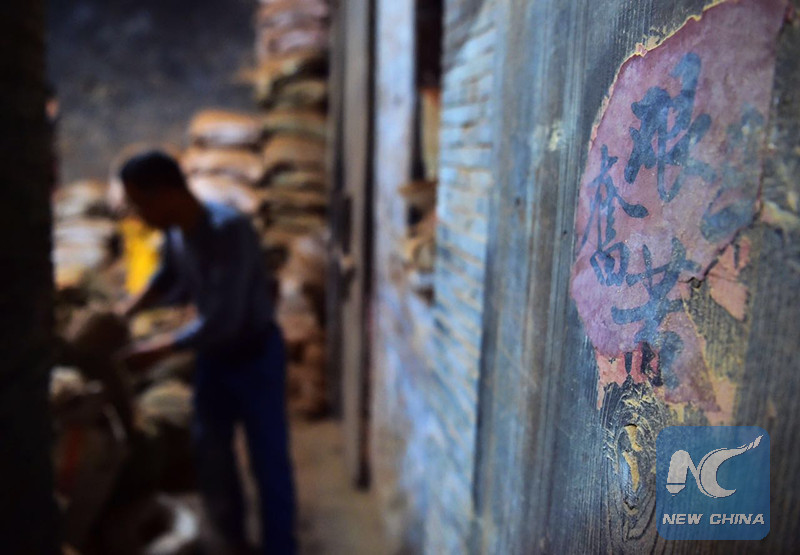
Today, there are machines that can make dozens of kilograms of incense in an hour, but Pu Lianggong insists on making incense by hand. The adept craftsman is never tired of selecting spices, pulverising ingredients into fine powder and applying the powder to bamboo sticks.
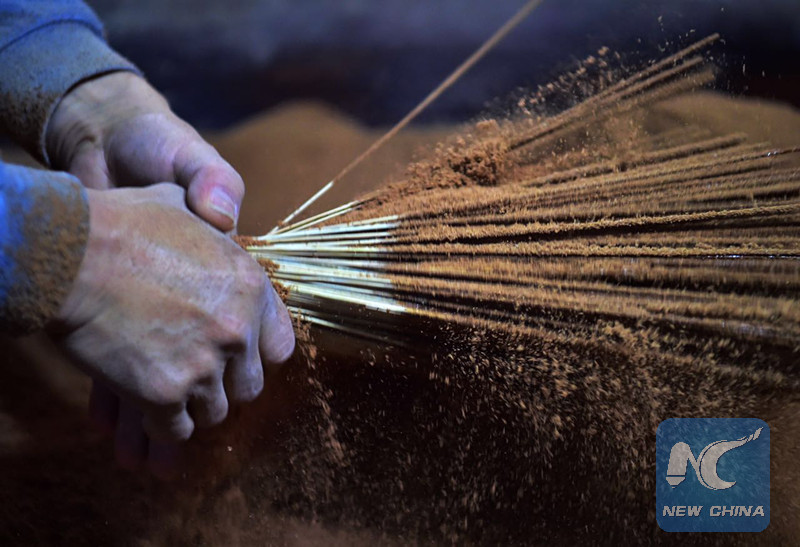
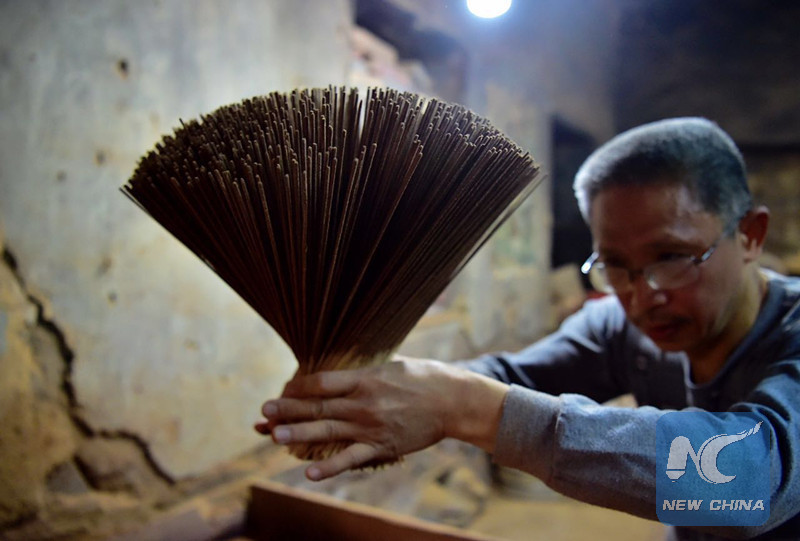
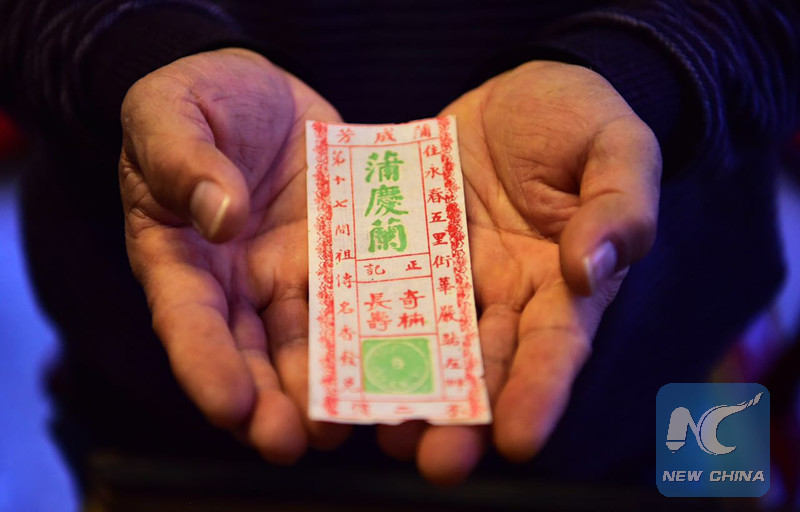
Pu Lianggong still uses an old packaging for his incense.

Incense has been widely used in China in ceremonies and as medicine for more than 2,000 years. Influenced by the Pu family, incense making has become a local industry in Dapu Town of Quanzhou City. There are about 300 incense manufacturers in Dapu, with more than 30,000 people working in the industry.

Incense is dried in the sunshine in a manufacturer in Dapu.

A worker dries incense in a manufacturer in Dapu.

Pu Lianggong is teaching his younger son all he has mastered. To keep up with the booming e-commerce today, Pu, with the help of his younger son, is selling his hand-made incense to Southeast Asia and Europe online.

Pu Lianggong (R) teaches his younger son how to select spices.

Now, the incense that originates from the other end of the ancient maritime Silk Road begins to emanate fragrance from the starting point along the route, thanks to China's Belt and Road Initiative, which aims to build a trade and infrastructure network connecting Asia with Europe and Africa.

"The initiative means great opportunities to incense makers like us," said Pu Lianggong, "We must grasp the chance to promote our family legacy worldwide."

(All photos by Wei Peiquan)

Back to Top Close
Xinhuanet

Incense-maker passes on 150-year-old Arabic scent

Source: Xinhua 2017-04-05 15:53:38

Incense-maker Pu Lianggong selects spices.

Pu Lianggong knows every bit of incense making -- a dozen steps and hundreds of spices -- just like his Arabian ancestors did about 150 years ago.

The 63-year-old is the tenth generation in an incense-making family of Arab descent in Quanzhou City, east China's Fujian Province. His spice merchant ancestors set sail from Arab and arrived at the Chinese port city, which is known as the starting point of the ancient maritime Silk Road, in around 1646. They settled down and made a living by selling spices.

Generation after generation, the Arabians gradually married local Chinese and began to adopt the Chinese surname Pu. About 150 years ago, the Pu family began to make incense using abundant bamboos there and spices from their homeland.

Despite its Arabic origin, Pu's incense is different from the scented chips called "bukhoor" in most Arab countries. Similar to Chinese stick incense, it is bamboo sticks wrapped by grinded spices.

Today, there are machines that can make dozens of kilograms of incense in an hour, but Pu Lianggong insists on making incense by hand. The adept craftsman is never tired of selecting spices, pulverising ingredients into fine powder and applying the powder to bamboo sticks.
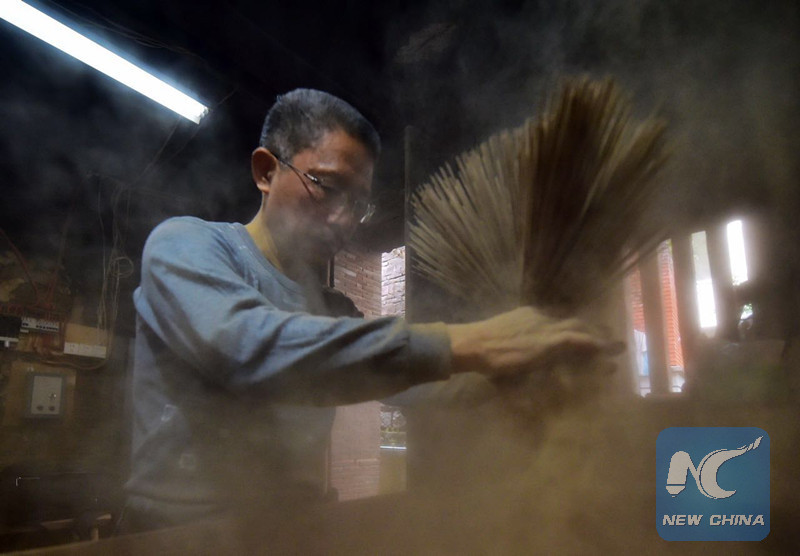
Pu Lianggong still uses an old packaging for his incense.

Incense has been widely used in China in ceremonies and as medicine for more than 2,000 years. Influenced by the Pu family, incense making has become a local industry in Dapu Town of Quanzhou City. There are about 300 incense manufacturers in Dapu, with more than 30,000 people working in the industry.

Incense is dried in the sunshine in a manufacturer in Dapu.
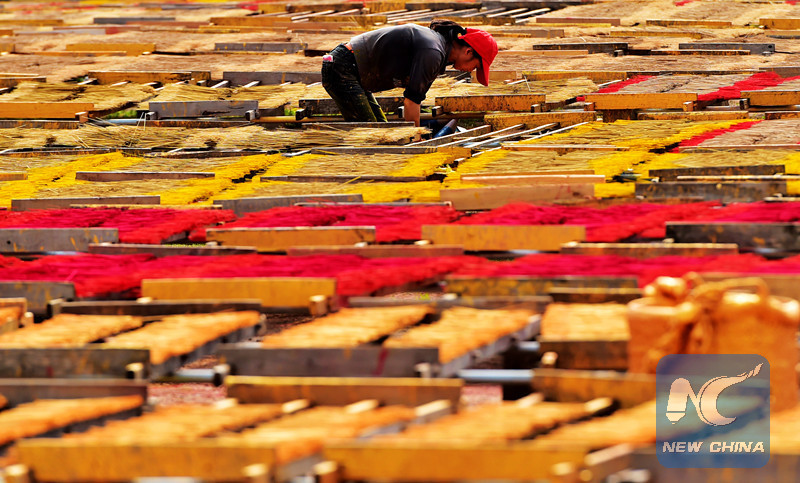
A worker dries incense in a manufacturer in Dapu.

Pu Lianggong is teaching his younger son all he has mastered. To keep up with the booming e-commerce today, Pu, with the help of his younger son, is selling his hand-made incense to Southeast Asia and Europe online.
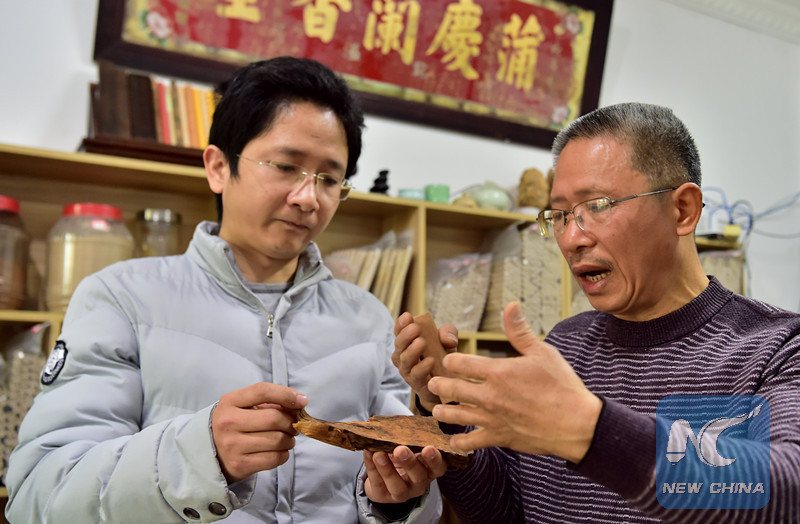
Pu Lianggong (R) teaches his younger son how to select spices.

Now, the incense that originates from the other end of the ancient maritime Silk Road begins to emanate fragrance from the starting point along the route, thanks to China's Belt and Road Initiative, which aims to build a trade and infrastructure network connecting Asia with Europe and Africa.

"The initiative means great opportunities to incense makers like us," said Pu Lianggong, "We must grasp the chance to promote our family legacy worldwide."
(All photos by Wei Peiquan)

010020070750000000000000011100001361845831