Russia's population estimated at 137-157 million by 2036
                 Source: Xinhua | 2018-07-24 23:51:15 | Editor: huaxia

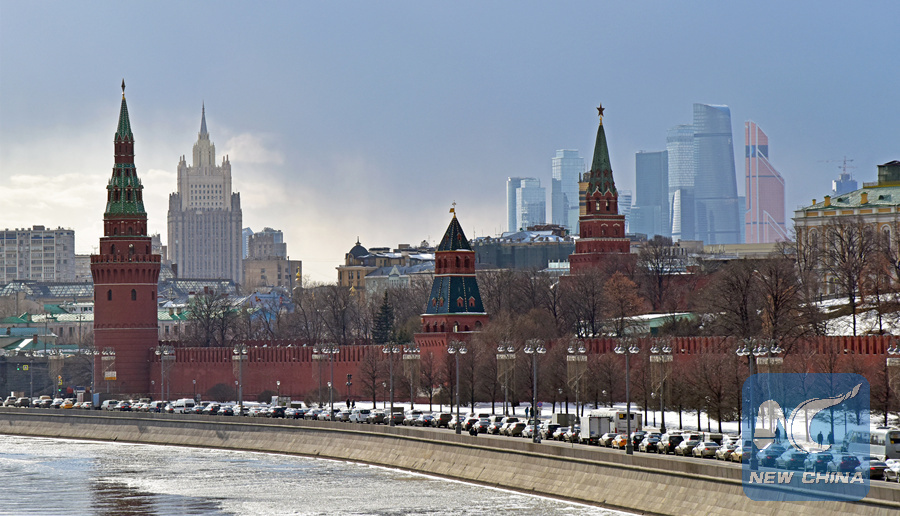
The Kremlin is seen in downtown Moscow, Russia on March 28, 2018. (Xinhua/Shi Hao)

MOSCOW, July 24 (Xinhua) -- Russia's population may rise by 10 million from current 147 million by 2036 or decline by the same number, the national statistics service Rosstat said Tuesday.

Rosstat forecast that the country's population may reach 157 million under an optimistic scenario, but it may remain unchanged or drop to 137 million under a pessimistic scenario.

Russian President Vladimir Putin signed last month a decree setting a target of raising average life expectancy to 78 years by 2024 and to 80 years by 2030, from 73 years in 2017.

According to Rosstat, average life expectancy in Russia is expected to reach 76.7 years in 2024 under an optimistic scenario and 73.3 years under a pessimistic one, or 79.7 years and 74.1 years respectively by 2030.

The presidential decree also set targets of increasing births and reducing mortality.

The demographic situation in Russia is worsening mainly due to the heavy losses during World War II and the economic hardship in the 1990s following the collapse of the Soviet Union.

Russia aims to boost its economy in the coming years, but it faces a gradual decline in population, which could translate into a labor shortage.

The Russian government plans to gradually extend the retirement age to 65 from 60 for men and to 63 from 55 for women starting next year.

The country has rolled out a set of measures, including financial support, to encourage births. It is also working on encouraging nationals abroad to move back to Russia.

Back to Top Close
Xinhuanet

Russia's population estimated at 137-157 million by 2036

Source: Xinhua 2018-07-24 23:51:15

The Kremlin is seen in downtown Moscow, Russia on March 28, 2018. (Xinhua/Shi Hao)

MOSCOW, July 24 (Xinhua) -- Russia's population may rise by 10 million from current 147 million by 2036 or decline by the same number, the national statistics service Rosstat said Tuesday.

Rosstat forecast that the country's population may reach 157 million under an optimistic scenario, but it may remain unchanged or drop to 137 million under a pessimistic scenario.

Russian President Vladimir Putin signed last month a decree setting a target of raising average life expectancy to 78 years by 2024 and to 80 years by 2030, from 73 years in 2017.

According to Rosstat, average life expectancy in Russia is expected to reach 76.7 years in 2024 under an optimistic scenario and 73.3 years under a pessimistic one, or 79.7 years and 74.1 years respectively by 2030.

The presidential decree also set targets of increasing births and reducing mortality.

The demographic situation in Russia is worsening mainly due to the heavy losses during World War II and the economic hardship in the 1990s following the collapse of the Soviet Union.

Russia aims to boost its economy in the coming years, but it faces a gradual decline in population, which could translate into a labor shortage.

The Russian government plans to gradually extend the retirement age to 65 from 60 for men and to 63 from 55 for women starting next year.

The country has rolled out a set of measures, including financial support, to encourage births. It is also working on encouraging nationals abroad to move back to Russia.

010020070750000000000000011105091373458411