Inspectors test grain in Red Sea mills before giving to starving Yemenis: UN
                 Source: Xinhua | 2019-02-28 05:57:23 | Editor: huaxia

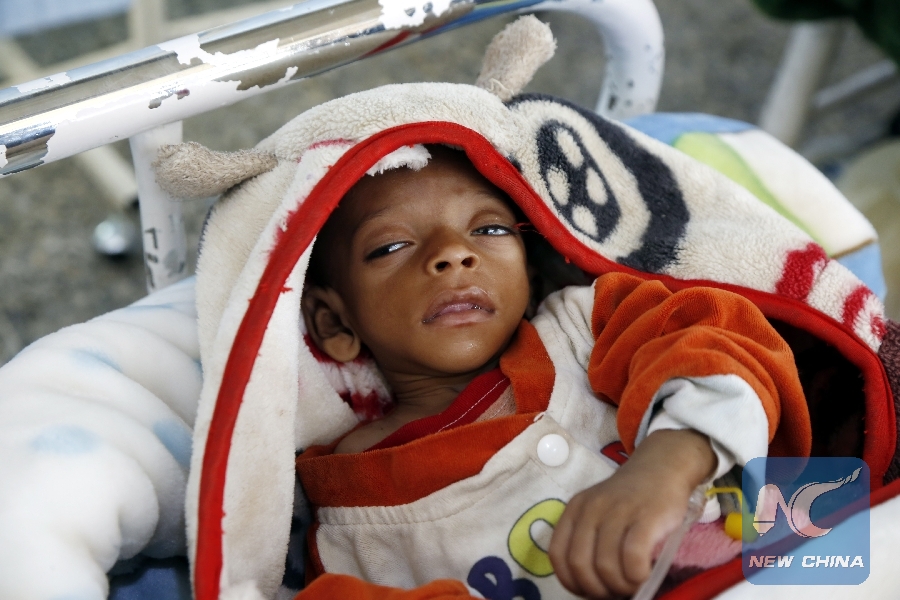
A child receives treatment at a malnutrition care center in Sanaa, Yemen, Feb. 19, 2019. (Xinhua/Mohammed Mohammed)

UNITED NATIONS, Feb. 27 (Xinhua) -- Inspectors of the World Food Programme (WFP) on Wednesday awaited results of tests on grain -- some of it already infested -- from the Red Sea mills in Yemen's Hodeidah port, before approving it for distribution, a UN spokesman said.

Stephane Dujarric, spokesman for UN Secretary-General Antonio Guterres, said the assessment team that gained access Tuesday -- the first since September -- "sent samples of the wheat to labs to test the quality and is awaiting the results."

"Some of the wheat is infected, which is something that was anticipated," Dujarric said. "WFP will need to fumigate the wheat. But they do not see any evidence of water damage to the wheat, which is in itself a very good sign."

Tuesday's visit was "a great first step but WFP needs sustained access to the mills in order to fumigate the wheat and then start milling it," Dujarric said. "To do that, we need safe unconditional passage to the mills for humanitarian staff and the mill workers. This will take weeks of sustained access to the mills to get the facility up and running again."

A shaky cease-fire between government forces and Houthi rebels has been in place since December allowing for the access. Negotiations have been taking place to establish demilitarized zones in the region to allow humanitarian aid to reach starving Yemenis.

When intense fighting broke out in Yemen's key West Coast city of Hodeidah in September, WFP lost access to the Red Sea mills, the food agency said. "The mills contained 51,000 metric tons or a quarter of the agency's in-country stock, enough wheat to feed 3.7 million people for one month."

The UN's food agency said that properly stored wheat can last in silos for over a year.

The long-running Yemeni conflict has caused the world's worst humanitarian crisis. Currently, some 24 million Yemenis, or 80 percent of the entire population, need humanitarian assistance, the United Nations has said.

Back to Top Close
Xinhuanet

Inspectors test grain in Red Sea mills before giving to starving Yemenis: UN

Source: Xinhua 2019-02-28 05:57:23

A child receives treatment at a malnutrition care center in Sanaa, Yemen, Feb. 19, 2019. (Xinhua/Mohammed Mohammed)

UNITED NATIONS, Feb. 27 (Xinhua) -- Inspectors of the World Food Programme (WFP) on Wednesday awaited results of tests on grain -- some of it already infested -- from the Red Sea mills in Yemen's Hodeidah port, before approving it for distribution, a UN spokesman said.

Stephane Dujarric, spokesman for UN Secretary-General Antonio Guterres, said the assessment team that gained access Tuesday -- the first since September -- "sent samples of the wheat to labs to test the quality and is awaiting the results."

"Some of the wheat is infected, which is something that was anticipated," Dujarric said. "WFP will need to fumigate the wheat. But they do not see any evidence of water damage to the wheat, which is in itself a very good sign."

Tuesday's visit was "a great first step but WFP needs sustained access to the mills in order to fumigate the wheat and then start milling it," Dujarric said. "To do that, we need safe unconditional passage to the mills for humanitarian staff and the mill workers. This will take weeks of sustained access to the mills to get the facility up and running again."

A shaky cease-fire between government forces and Houthi rebels has been in place since December allowing for the access. Negotiations have been taking place to establish demilitarized zones in the region to allow humanitarian aid to reach starving Yemenis.

When intense fighting broke out in Yemen's key West Coast city of Hodeidah in September, WFP lost access to the Red Sea mills, the food agency said. "The mills contained 51,000 metric tons or a quarter of the agency's in-country stock, enough wheat to feed 3.7 million people for one month."

The UN's food agency said that properly stored wheat can last in silos for over a year.

The long-running Yemeni conflict has caused the world's worst humanitarian crisis. Currently, some 24 million Yemenis, or 80 percent of the entire population, need humanitarian assistance, the United Nations has said.

010020070750000000000000011100001378557471