Xinhuanet

NTU-UCAS cooperation gives impetus to China-Singapore academic development

Source: CNC 2017-03-14 22:48:25


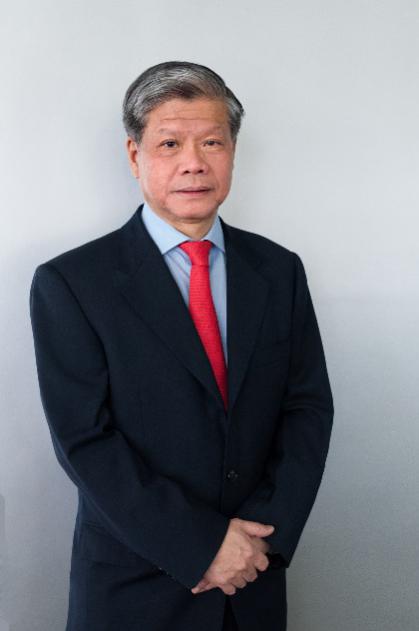
Professor Lam Khin Yong, NTU Singapore Chief of Staff and Vice President (Research) (Source: ntu.edu.sg)

By Cui Bowen from Xinhua News Agency

A signing ceremony of Memorandum of Understanding (MOU) was held on March 9 in Beijing, to strengthen academic ties between Singapore’s Nanyang Technological University (NTU) and University of Chinese Academy of Science (UCAS).

The two parties signed a five-year cooperation memorandum, rolling out a new phase in the China-Singapore academic exchange and coordination.

Prior to the signing ceremony, Xinhua News Agency had an exclusive interview with Prof. Lam Khin Yong, NTU Chief of Staff & Vice President (Research) to discuss topics related to the rapid growth of NTU, exchange programs with UCAS and expectation for NTU-UCAS coordination.

Xinhua: What are the main contributing factors that make NTU a world top-notch university over the past two decades?

Prof. Lam: As a young and research intensive university, NTU’s rapid success in the last several years can be attributed to factors such as our ability to attract top faculty and post-doctoral and high quality students, and strong support from funding agencies and the industry.

We have attracted top minds from all over the world and also nurtured many young scientists at NTU. For example, Professor David Lou from NTU School of Chemical and Biomedical Engineering and Professor Zhang Hua from NTU School of Materials Science and Engineering, are the only two Asian scientists to be named by Thomson Reuters among the world’s “hottest researchers” for their outstanding contributions to research.

Having talented faculty from all over the world is an inspiration to our students and helps to cultivate an international outlook in them, making them better prepared for the global workplace of the future.

Besides recruiting established professors, NTU has also been successful in attracting young, outstanding researchers. They bring new and exciting ideas to NTU, with many working at the frontiers of research. Clearly, people are our most important asset and play a key role behind NTU’s rapid rise as a leading global university.

To generate new knowledge and research breakthroughs, NTU advocates interdisciplinary research. We also have many programs that allow students to take up another field of study beyond their core discipline, so that they are exposed to an interdisciplinary education right from the start.

Today’s students will graduate into a working world where many jobs will be newly created. That is why NTU has always emphasized a broad and global education where students go beyond their core disciplines.

NTU undergraduates can deepen their knowledge beyond their core discipline by taking up another field of study from the almost 80 subject combinations across various disciplines. Students can take up double majors or alternatively pair their major with a second major or minor of their choice.

Singapore has also created a favorable environment for the growth of tertiary institutions. Research frontiers have been pushed with the support of its Research, Innovation and Enterprise (RIE) 2015 Plan that committed SGD$16 billion. Just last year, the RIE 2020 Plan was announced with an investment of another SGD$19 billion. This continuous support has helped grow the local research scene.

Xinhua: Why does NTU attach great importance to exchange and cooperation with colleges and universities as well as enterprises?

Prof. Lam: NTU has more than 400 partnerships worldwide with universities and industry players such as Imperial College London, Peking University, Cambridge University, Technical University of Munich and University of California Berkeley. Such partnerships allow us to leverage our expertise and work with leading experts in areas of mutual interest. NTU also benefits from the many faculty and student exchanges from leading universities. Our students value such opportunities where they get to study overseas and be exposed to top-level research.

We also have research collaborations with leading industry players such as Rolls-Royce, BMW, Lushang and Tencent in China, NXP Semiconductors N.V. and ST Engineering. By combining our expertise with those from some of the world’s leading companies, we are in a better position to innovate and help solve real-world problems.

In the past, scientists spend years on research and then try to find a use for their research finding. Delays in finding an application may lead to findings being outdated or no longer appropriate for industrial use. However, by collaborating with industry right from the start, research findings can be put to good use as they help tackle the very problems that the industry is seeking to solve. Thus the research outcomes can be translated into commercial products and services that benefit the society. At the same time, students who join the research projects will benefit from early exposure to the industry.

Xinhua: Why does NTU decide to strengthen research and exchange ties with UCAS?

Prof. Lam: UCAS, backed by 117 CAS institutes in China, is recognized for its top-level facilities and highly-qualified faculty teams. It also spearheads science and technology research and scientific talents training in China. With NTU’s strong research track record in engineering and technology and its long standing relationship with UCAS, the two institutions are natural partners.

This time both parties have embarked on an all-round collaboration for five years. Under the agreement, the two leading institutions in Asia will enhance joint research collaborations as well as ramp up visits and exchanges for students, academic and research staff.

The collaboration taps on the expertise of both institutes, and seeks to translate research outcomes in fields such as artificial intelligence (AI), Internet-of-Things (IoT), big data analytics and virtual reality (VR) into useful commercial products and services.

Xinhua: As Singapore is an important country along the 21st-Century Maritime Silk Road, how does NTU shape itself following the Belt and Road Initiative?

Prof Lam: The 21st-Century Maritime Silk Road bridges the East and the West, and Singapore is a melting pot of Eastern and Western cultures. While the Belt and Road Initiative focuses on economic activities, research can also be part of the initiative.

We have many collaborations with China’s universities and companies, such as the Sino-Singapore International Joint Research Institute in Guangzhou. It aims to develop new technologies ranging from electric vehicles and sustainable urban development to nutrition and food science.

We have also set up the Center of Excellence for Software Transfer in Guangzhou to give business executives from both countries a better understanding of the environment and policies in each country. As you may note, Guangzhou was also one of the starting points of the ancient Maritime Silk Road. Today, it is one of the vibrant hubs for economic activities, so it is quite apt that more research collaborations between NTU and its Chinese partners are taking place here.

In addition, we have worked with a number of China’s leading companies. For example, we are partnering technology giant Tencent on developing image-based search tools, through a joint lab with Peking University. We are also working with Inspur in the area of cloud computing.

NTU’s Nanyang Environment & Water Research Institute and its spin-off companies have also collaborated with Chinese companies on agro-industrial projects spread over a number of provinces.

Research on these mutual interests will help to foster beneficial outcomes on a wider scale. The Belt and Road initiative is about connectivity, and research connects people and institutions, too.

Xinhua: What’s your expectation for NTU-UCAS cooperation?

Prof. Lam: NTU and UCAS have a lot in common, both being globally recognized institutions that are committed to building a diversified environment. We also have high-tech laboratories and facilities as well as top-tier faculty to offer an effective education platform for students.

There was an initial phase of academic cooperation between NTU and GUCAS (the Graduate University of Chinese Academy of Sciences), the predecessor of UCAS. This time, research can also benefit from this initiative, with an important aim of translating research innovations into beneficial outcomes for society. Our ties will also be strengthened with visits and exchange programs involving students, faculty and research staff.

As the saying goes, “The golden age is before us, not behind us”. I look forward to NTU Singapore and UCAS working closely together to achieve greater research breakthroughs in the future.

 
NTU-UCAS cooperation gives impetus to China-Singapore academic development
                 Source: CNC | 2017-03-14 22:48:25 | Editor: Tian Shaohui


Professor Lam Khin Yong, NTU Singapore Chief of Staff and Vice President (Research) (Source: ntu.edu.sg)

By Cui Bowen from Xinhua News Agency

A signing ceremony of Memorandum of Understanding (MOU) was held on March 9 in Beijing, to strengthen academic ties between Singapore’s Nanyang Technological University (NTU) and University of Chinese Academy of Science (UCAS).

The two parties signed a five-year cooperation memorandum, rolling out a new phase in the China-Singapore academic exchange and coordination.

Prior to the signing ceremony, Xinhua News Agency had an exclusive interview with Prof. Lam Khin Yong, NTU Chief of Staff & Vice President (Research) to discuss topics related to the rapid growth of NTU, exchange programs with UCAS and expectation for NTU-UCAS coordination.

Xinhua: What are the main contributing factors that make NTU a world top-notch university over the past two decades?

Prof. Lam: As a young and research intensive university, NTU’s rapid success in the last several years can be attributed to factors such as our ability to attract top faculty and post-doctoral and high quality students, and strong support from funding agencies and the industry.

We have attracted top minds from all over the world and also nurtured many young scientists at NTU. For example, Professor David Lou from NTU School of Chemical and Biomedical Engineering and Professor Zhang Hua from NTU School of Materials Science and Engineering, are the only two Asian scientists to be named by Thomson Reuters among the world’s “hottest researchers” for their outstanding contributions to research.

Having talented faculty from all over the world is an inspiration to our students and helps to cultivate an international outlook in them, making them better prepared for the global workplace of the future.

Besides recruiting established professors, NTU has also been successful in attracting young, outstanding researchers. They bring new and exciting ideas to NTU, with many working at the frontiers of research. Clearly, people are our most important asset and play a key role behind NTU’s rapid rise as a leading global university.

To generate new knowledge and research breakthroughs, NTU advocates interdisciplinary research. We also have many programs that allow students to take up another field of study beyond their core discipline, so that they are exposed to an interdisciplinary education right from the start.

Today’s students will graduate into a working world where many jobs will be newly created. That is why NTU has always emphasized a broad and global education where students go beyond their core disciplines.

NTU undergraduates can deepen their knowledge beyond their core discipline by taking up another field of study from the almost 80 subject combinations across various disciplines. Students can take up double majors or alternatively pair their major with a second major or minor of their choice.

Singapore has also created a favorable environment for the growth of tertiary institutions. Research frontiers have been pushed with the support of its Research, Innovation and Enterprise (RIE) 2015 Plan that committed SGD$16 billion. Just last year, the RIE 2020 Plan was announced with an investment of another SGD$19 billion. This continuous support has helped grow the local research scene.

Xinhua: Why does NTU attach great importance to exchange and cooperation with colleges and universities as well as enterprises?

Prof. Lam: NTU has more than 400 partnerships worldwide with universities and industry players such as Imperial College London, Peking University, Cambridge University, Technical University of Munich and University of California Berkeley. Such partnerships allow us to leverage our expertise and work with leading experts in areas of mutual interest. NTU also benefits from the many faculty and student exchanges from leading universities. Our students value such opportunities where they get to study overseas and be exposed to top-level research.

We also have research collaborations with leading industry players such as Rolls-Royce, BMW, Lushang and Tencent in China, NXP Semiconductors N.V. and ST Engineering. By combining our expertise with those from some of the world’s leading companies, we are in a better position to innovate and help solve real-world problems.

In the past, scientists spend years on research and then try to find a use for their research finding. Delays in finding an application may lead to findings being outdated or no longer appropriate for industrial use. However, by collaborating with industry right from the start, research findings can be put to good use as they help tackle the very problems that the industry is seeking to solve. Thus the research outcomes can be translated into commercial products and services that benefit the society. At the same time, students who join the research projects will benefit from early exposure to the industry.

Xinhua: Why does NTU decide to strengthen research and exchange ties with UCAS?

Prof. Lam: UCAS, backed by 117 CAS institutes in China, is recognized for its top-level facilities and highly-qualified faculty teams. It also spearheads science and technology research and scientific talents training in China. With NTU’s strong research track record in engineering and technology and its long standing relationship with UCAS, the two institutions are natural partners.

This time both parties have embarked on an all-round collaboration for five years. Under the agreement, the two leading institutions in Asia will enhance joint research collaborations as well as ramp up visits and exchanges for students, academic and research staff.

The collaboration taps on the expertise of both institutes, and seeks to translate research outcomes in fields such as artificial intelligence (AI), Internet-of-Things (IoT), big data analytics and virtual reality (VR) into useful commercial products and services.

Xinhua: As Singapore is an important country along the 21st-Century Maritime Silk Road, how does NTU shape itself following the Belt and Road Initiative?

Prof Lam: The 21st-Century Maritime Silk Road bridges the East and the West, and Singapore is a melting pot of Eastern and Western cultures. While the Belt and Road Initiative focuses on economic activities, research can also be part of the initiative.

We have many collaborations with China’s universities and companies, such as the Sino-Singapore International Joint Research Institute in Guangzhou. It aims to develop new technologies ranging from electric vehicles and sustainable urban development to nutrition and food science.

We have also set up the Center of Excellence for Software Transfer in Guangzhou to give business executives from both countries a better understanding of the environment and policies in each country. As you may note, Guangzhou was also one of the starting points of the ancient Maritime Silk Road. Today, it is one of the vibrant hubs for economic activities, so it is quite apt that more research collaborations between NTU and its Chinese partners are taking place here.

In addition, we have worked with a number of China’s leading companies. For example, we are partnering technology giant Tencent on developing image-based search tools, through a joint lab with Peking University. We are also working with Inspur in the area of cloud computing.

NTU’s Nanyang Environment & Water Research Institute and its spin-off companies have also collaborated with Chinese companies on agro-industrial projects spread over a number of provinces.

Research on these mutual interests will help to foster beneficial outcomes on a wider scale. The Belt and Road initiative is about connectivity, and research connects people and institutions, too.

Xinhua: What’s your expectation for NTU-UCAS cooperation?

Prof. Lam: NTU and UCAS have a lot in common, both being globally recognized institutions that are committed to building a diversified environment. We also have high-tech laboratories and facilities as well as top-tier faculty to offer an effective education platform for students.

There was an initial phase of academic cooperation between NTU and GUCAS (the Graduate University of Chinese Academy of Sciences), the predecessor of UCAS. This time, research can also benefit from this initiative, with an important aim of translating research innovations into beneficial outcomes for society. Our ties will also be strengthened with visits and exchange programs involving students, faculty and research staff.

As the saying goes, “The golden age is before us, not behind us”. I look forward to NTU Singapore and UCAS working closely together to achieve greater research breakthroughs in the future.

分享
China donates teaching equipment to Kabul University
Chinese top legislator presides over closing meeting of 5th session of 12th NPC
In pics: Chinese Premier Li Keqiang meets the press
Closing meeting of 5th session of China's 12th NPC held in Beijing
Rescue work under way for stranded sperm whale near S China's dock
Voters prepare to cast ballot in The Hague, the Netherlands
Chile holds meeting on Asia-Pacific economic integration
Dust storm hits Doha
Egypt issues decree to pardon 203 jailed young people in Cairo
Back to Top Close
010020070750000000000000011103261361283711