


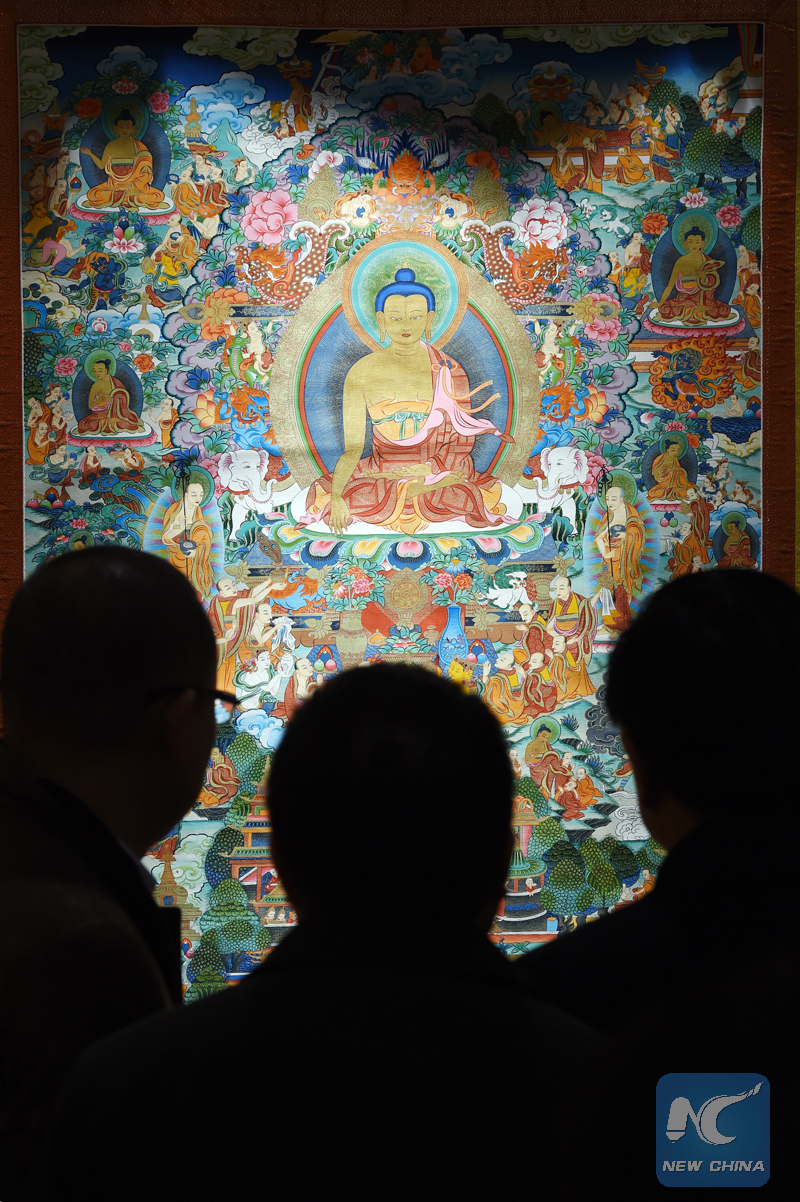
People visit an exhibition of Tibetan thangka painting in Lanzhou, capital of northwest China's Gansu Province, Jan. 18, 2016. (Xinhua/Fan Peishen)
If you are interested in Tibet and Tibetan culture, "thangka" is one of those words you must have heard of.
As an over 1300-year-old traditional Tibetan form of religious art, thangka can be seen almost everywhere in Tibet: in monasteries, shops and restaurants and at every Buddhist's home.
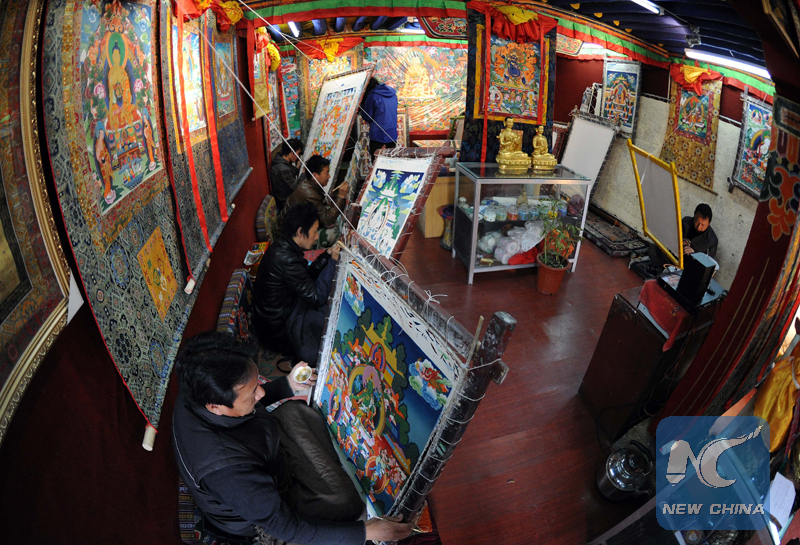
Painters draw thangka at a workshop on Barkhor Street in Lhasa, capital of southwest China's Tibet Autonomous Region. (Xinhua file photo)
The following Q&As will help you better understand the culture behind the painting.
Q1: What is a thangka & what is in a thangka?
First, let's take a look at some thangkas:
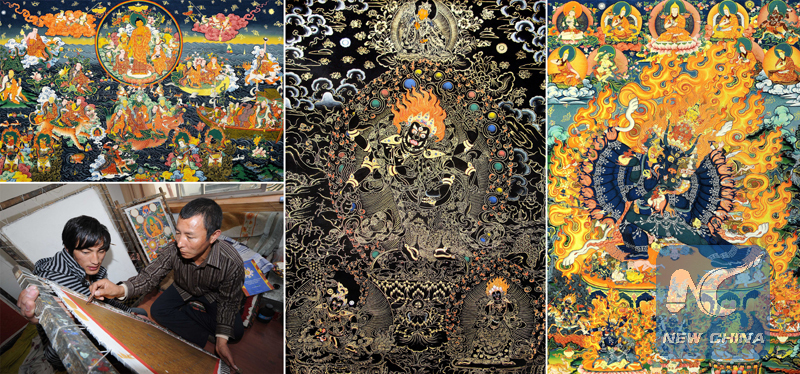
Thangka paintings and a student learning from a thangka master in Lhasa. (Xinhua file photos)
In most cases, thangkas are Tibetan Buddhist scroll paintings on paper, cloth or silk. There are also embroidered thangkas, silk woven thangkas, tapestry thangkas and appliqué thangkas. For an appliqué thangka, figures and patterns are cut out of colored satin and glued onto the canvas. Thangka paintings are usually framed in colorful silk brocade and overlain with a silk cover for better protection.
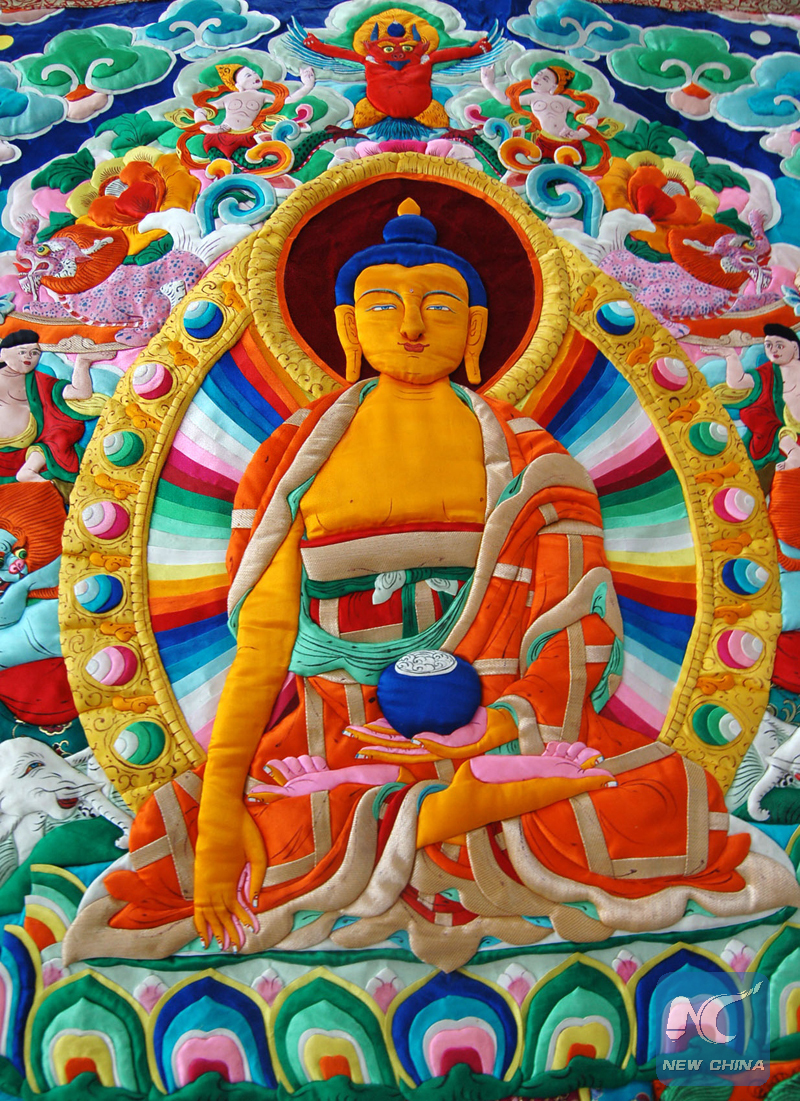
A silk woven thangka (Xinhua/Zhang Hongxiang)
Religious in nature, Tibetan thangkas' subjects are mainly deities, religious stories and mandala. Some also illustrate the history and customs of Tibet and lifestyles of Tibetan people. Biographical thangkas record the major life events concerning religious and historical figures.
Widely considered as the "encyclopedia of Tibetan culture", thangkas afford important materials for studying nearly all facets of Tibet.
Q2: Why is a thangka painted?
Thangkas record and guide.
By depicting the life (or lives) of the Buddha, stories associated with deities or historical events concerning important figures, thangkas record historical, religious and cultural details and information and can serve as a teaching tool.
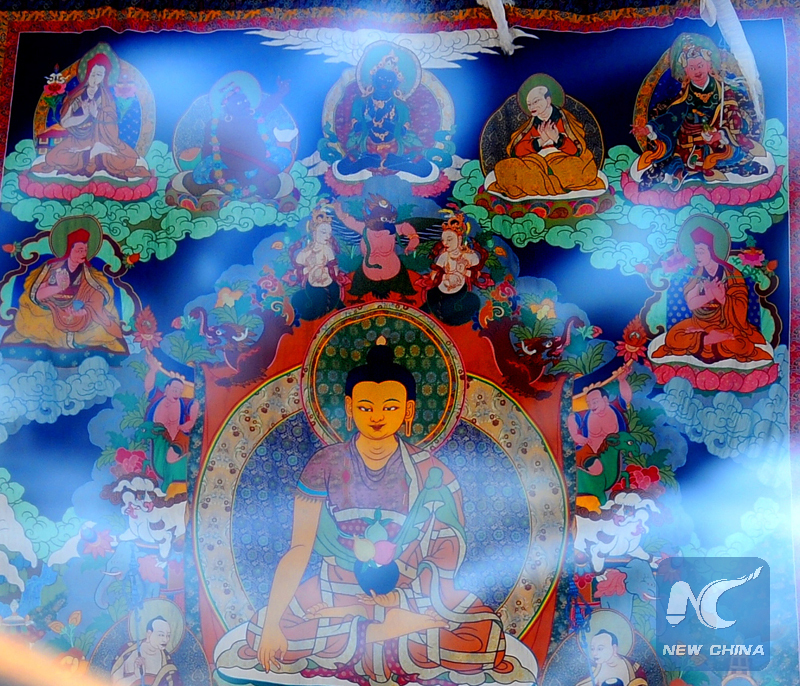
A silk thangka of Sakyamuni, the founder of Buddhism (Xinhua/Chogo)
The art is also a valuable meditation tool and offers a manifestation of the divine that is both visually and mentally stimulating, thus to guide contemplative experience. Some Buddhist practitioners even visualize themselves as being the deity painted on the thangka and thereby internalize the deity's qualities, which brings them further down the path to enlightenment.
While the size of most thankas is similar to a Western half-length portrait, some are extremely large, tens of meters in each dimension, mainly for display, typically for very brief periods on a monastery wall, as part of religious ceremonies.
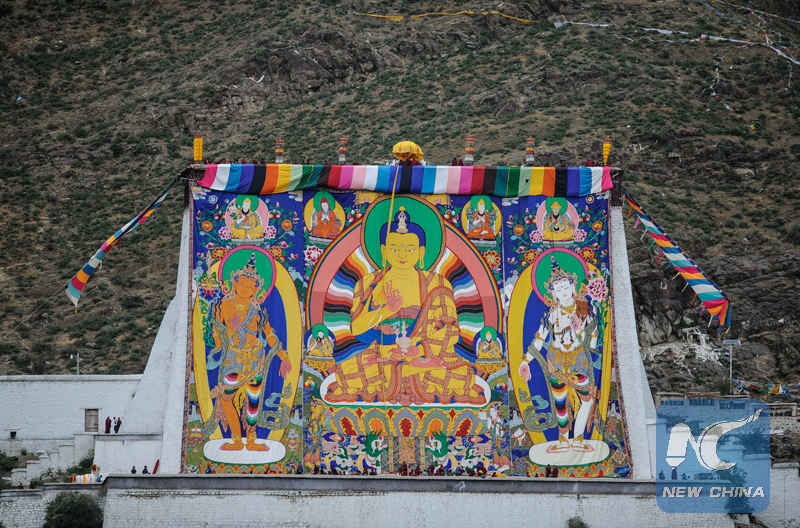
A huge thangka is displayed during the unveiling of the Buddha event at the Zhaxi Lhunbo Lamasery in Xigaze, southwest China's Tibet Autonomous Region, July 20, 2016. (Xinhua/Purbu Tashi)
Every year around July, the Zhaxi Lhunbo Lamasery, the home temple for Panchen Lamas, in Xigaze of Tibet will hold a grand ceremony known as "the basking of Buddha" -- unveiling giant Buddha thangkas for devotees to worship, pray and get blessed.
Q3: How to paint a thangka?
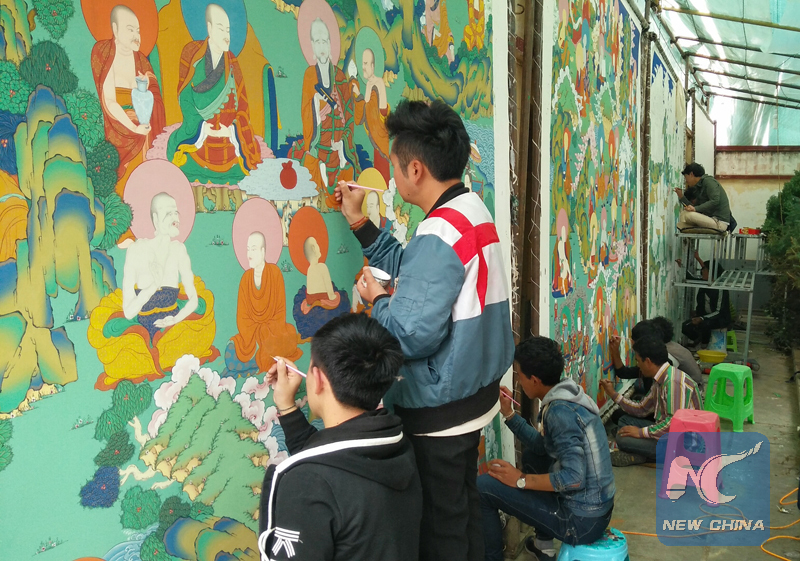
Thangka painters are working together on a huge painting at a workshop in Lhasa, July 20, 2016. (Xinhua/Jigme Dorje)
It is not difficult to tell from the delicacy and complexity of a thangka that painting one is highly difficult and complicated. But to put it simply, it usually contains the following steps:
Preparing canvas. Mount a piece of white cloth on a frame and then apply water-based colloid chalk to the surface. When it's dried, polish with talc and the canvas is ready for painting.
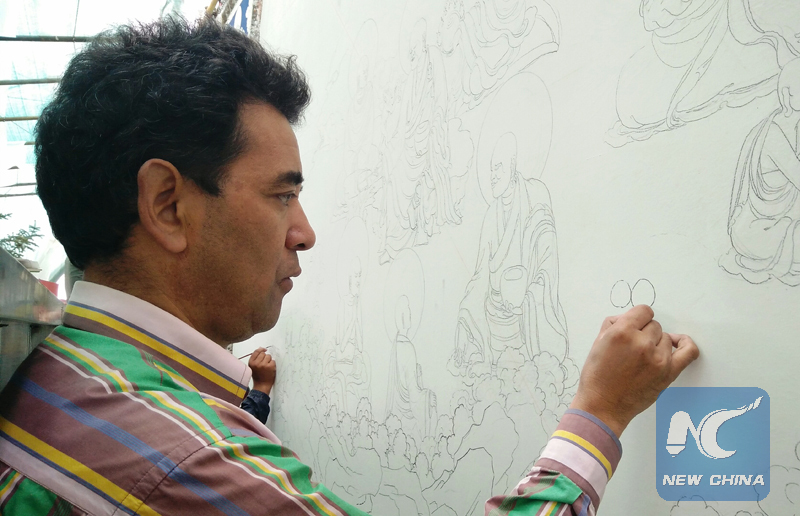
A thangka master is drawing foundational lines of the deities and other figures and objects. (Xinhua/Jigme Dorje)
Foundational line drawing. Artists usually start by drawing a grid of lines to help the composition of the painting and then sketch foundational lines of the deities and other figures and objects. The artist must be very familiar with the measurements and proportions of Buddhas, Boddhisattvas and other deities, as outlined in Buddhist iconography. But for very experienced artists, they can sketch directly without the grid system.
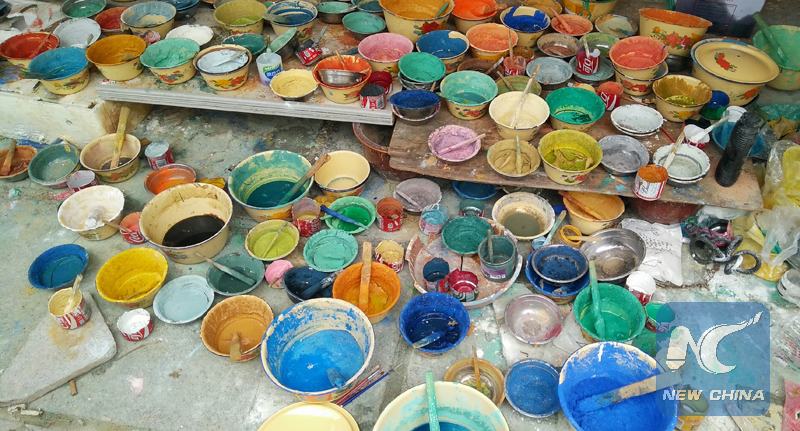
Thangka pigments of different colors (Xinhua/Jigme Dorje)
Mixing paint. Thangka has its very special color coordination, and can be generally divided into five colors: red, black, blue, golden and silver. Pigments are usually made from natural mineral materials to make sure the colors are vivid and can be sustained for thousands of years.
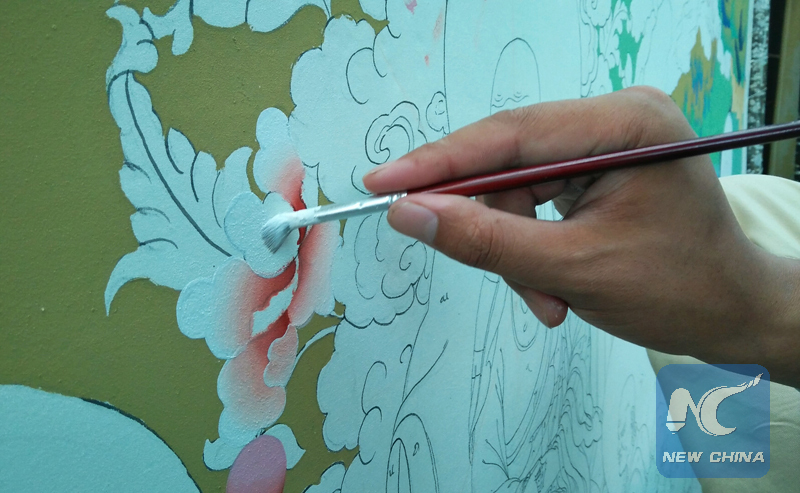
A thangka master is applying colors to flowers. (Xinhua/Jigme Dorje)
Painting or color application. There is a specific sequence to color application, usually from top to bottom. The artist then shades them with a fine paintbrush.
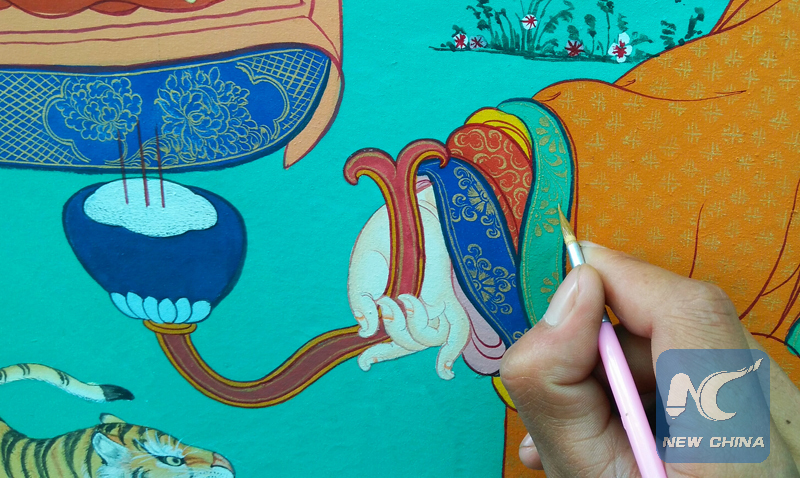
A thangka master is applying gold to the painting. (Xinhua/Jigme Dorje)
Gold application. A considerable quantity of gold is used to highlight and give the thangka glorious touches.
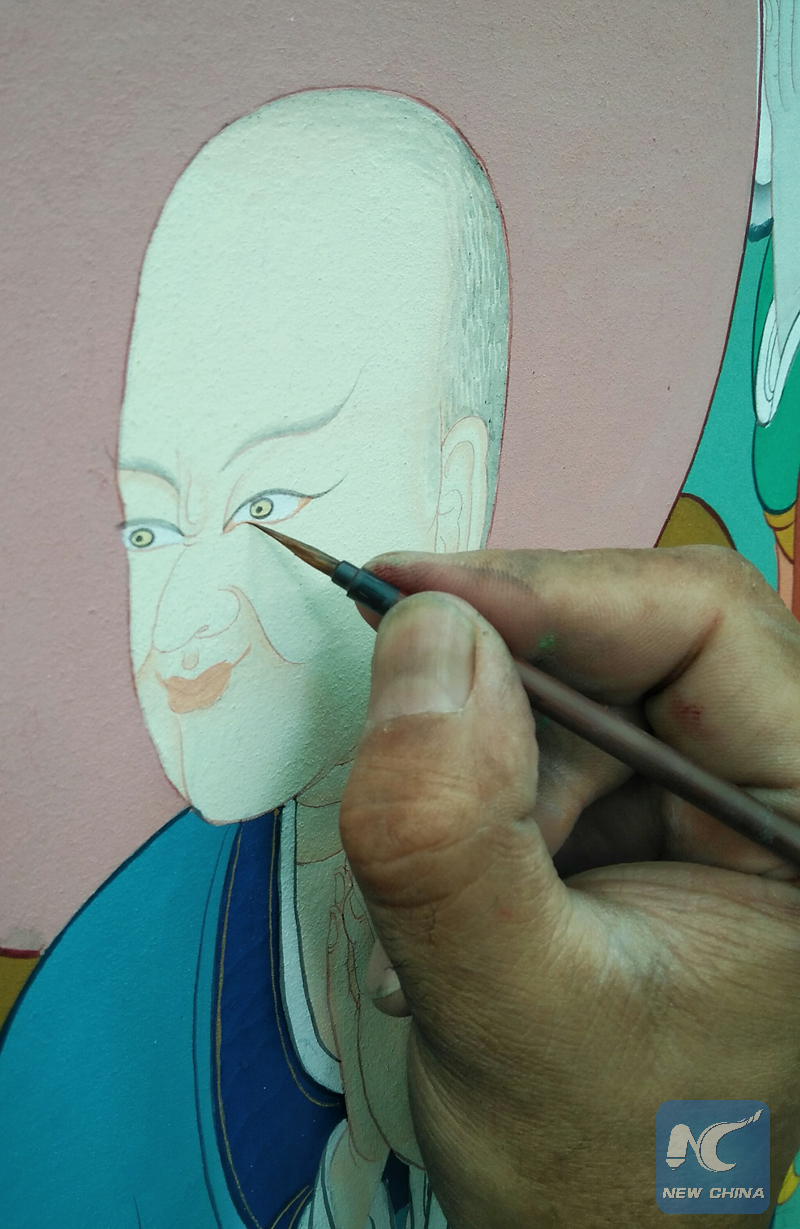
A thangka master is "opening the eyes" for the Buddha on the thangka painting. (Xinhua/Jigme Dorje)
Opening the eyes. This is the most important moment of a thangka artist's work after which the deity is complete and takes the divine look. When the eyes have been painted, seed syllables and prayers are inscribed on the back of the thangka to awaken the image's energy.
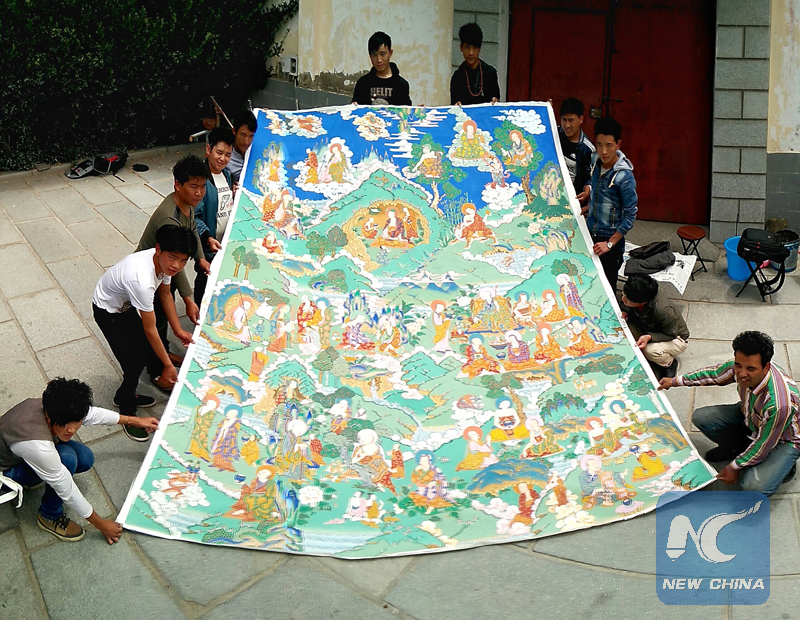
To complete such a huge thangka, it takes one artist at least three months. If three or four artists work together, the time can be shortened to about half a month. (Xinhua/Jigme Dorje)
Brocade. 4 to 6 days after the painting is completed, a brocade frame will be affixed to it.
Consecration. At last, a Buddhist practitioner will take his or her newly completed thangka to a highly realized Buddhist to "bring alive" the image on the thangka by infusing it with energy and beseeching the deity to open its eyes and look upon all sentient beings.
