


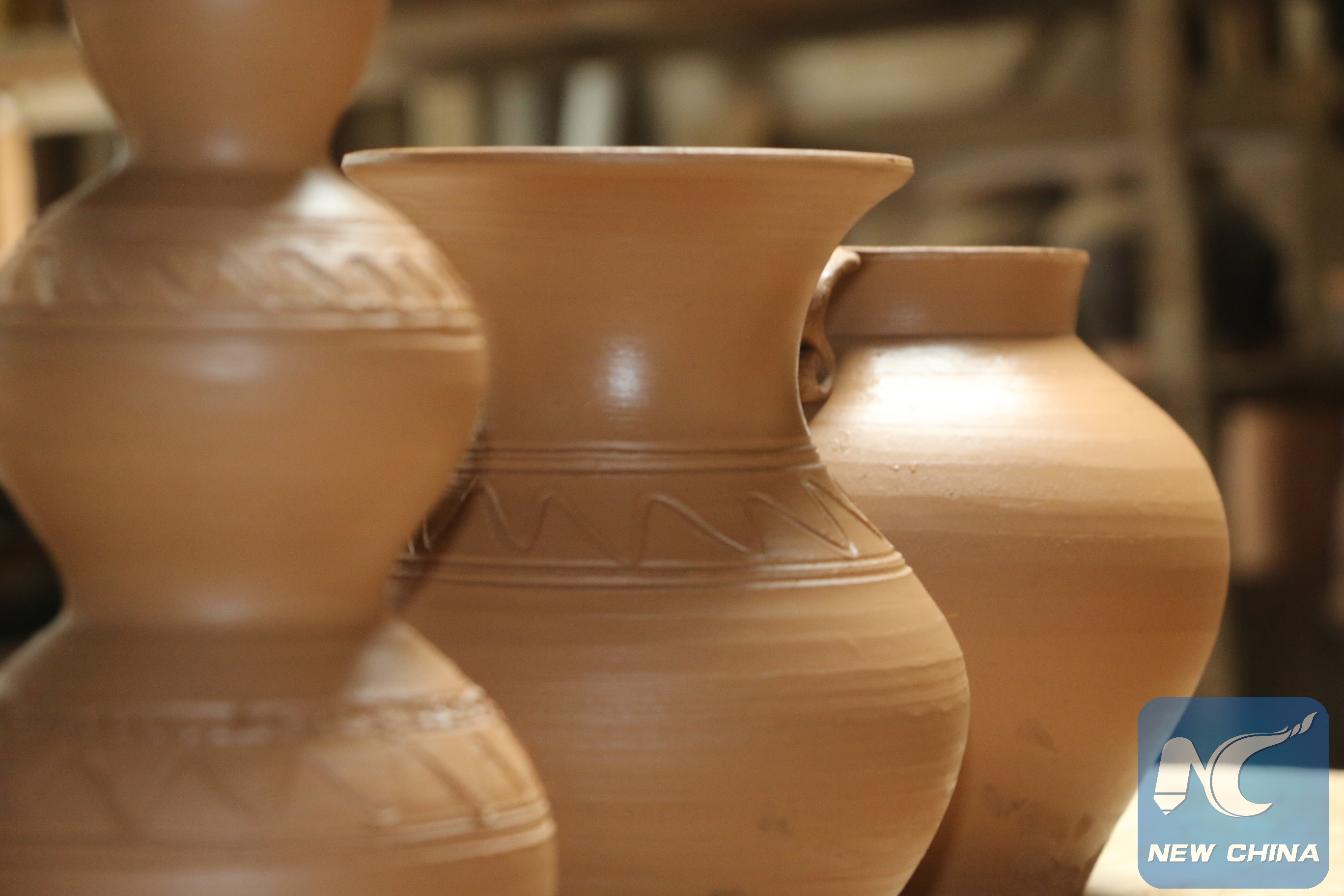
Traditional hand-made pottery in Kuqa County in northwest China's Xinjiang Uygur Autonomous Region.
Eyes are the thermometer. Kurban Tursun learned from his ancestors this ancient saying about temperature control for firing pottery. For the 33-year-old man, it means a matter of time to command the traditional craft.
His is one of the only two families that still survive on the craft of hand-made pottery in Wuqia Township, Kuqa County of northwest China's Xinjiang Uygur Autonomous Region. Kuqa is believed to boast nearly 2,000 years of history in pottery making, and Kurban Tursun is the seventh generation pottery craftsman in his family.
Kuqa was an important post on the Silk Road, an ancient trade route that linked China and the West.
It is believed that the craft of pottery making was spread to Kuqa from the Central Plains of ancient China, and over the centuries, Kurban's ancestors have developed their own style. The trace of the old town's once thriving history of pottery-making can be found on a mural in a cave dating back to 1,800 years ago.
However, the traditional craft has been gradually losing its glory. A challenge is from the mass industrial production.
"People have more options from the cheap industrial products. Nowadays only old men are using pottery tablewares," says Kurban Tursun. He once turned to making food bowls for pigeons to make more money.
Other challenges comes from nature.
Located beside the Taklimakan Desert, Kuqa does not have the soil that is suitable for making pottery as it contains too much sand. To get suitable clay, Kurban Tursun's father and grandfather have to go as far as 120 kilometers away to carry a load that is enough to sustain a week with a donkey cart.
It's a time-consuming process to prepare the clay. He has to add enough water to make the clay pliable as well as soft. Then he kneads the lump again and again and finally puts it away for an overnight "rest".
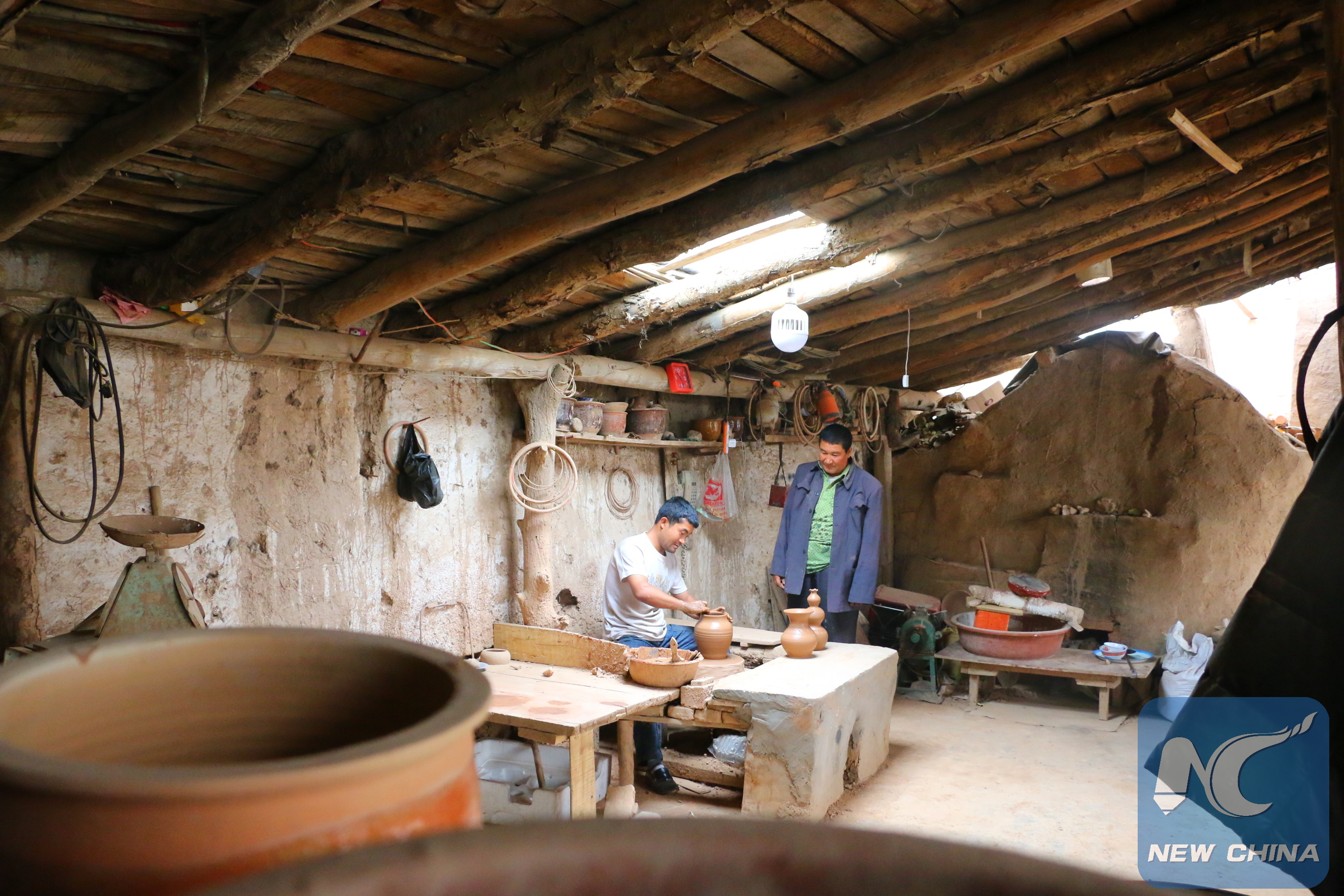
Kurban Tursun is making a pot.
"The clay is too stubborn on the first day, but it softens its 'temper' on the second day so that the clay becomes more pliable," he jokes.
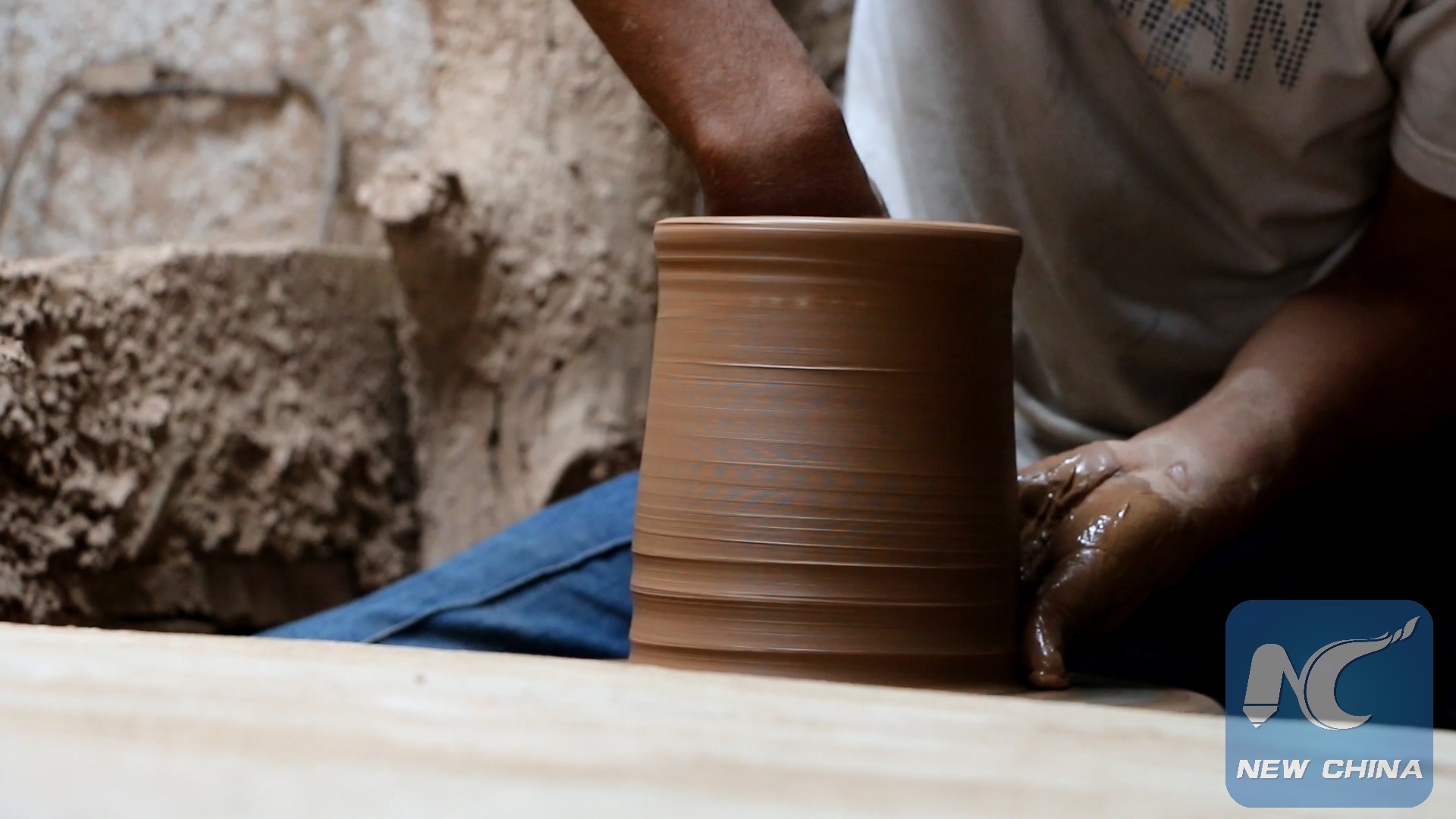
Kurban Tursun at work.
The forming step also requires patience. "You have to control the speed of the thrower to keep your hands and your mind steady, " Kurban Tursun says.
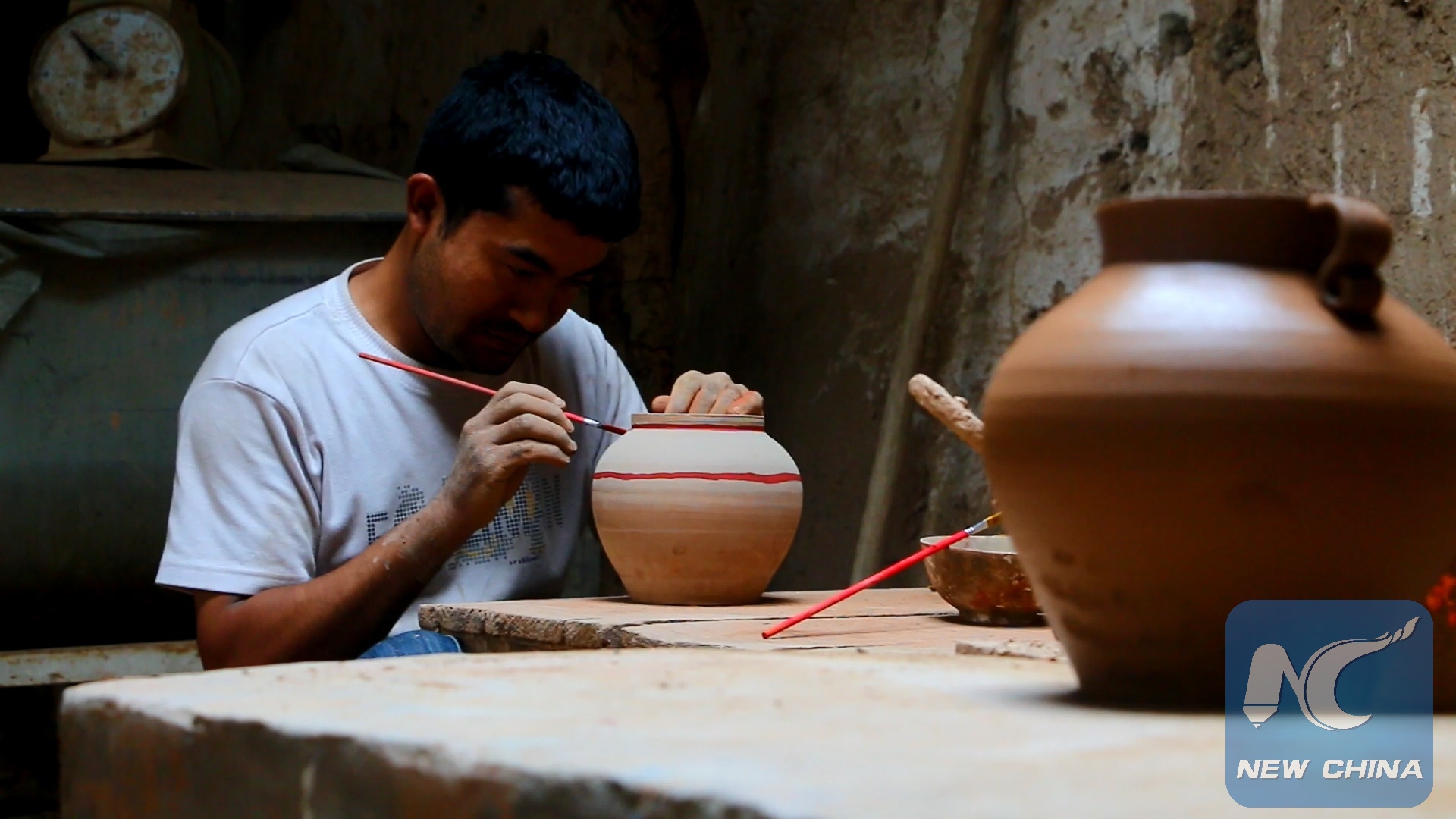
Kurban Tursun is glazing a pot.
He uses wood to fire the pottery because he thinks coal-firing will affect the gloss of the pottery and causes pollution.
There has been good news to Kurban Tursun and other pottery craftsmen as the local government has earmarked special funds to help revive the ancient craft. In 2001, his father Tursun Huseyin was appointed by the local government an inheritor of the intangible cultural heritage, which means the family can get allowance every month.
Meanwhile, booming tourism also helps its revival as tourists are fond of the traditional handicrafts. Kurban Tursun has purchased books on modern pottery making to cater to the taste of tourists.
"Challenges from the outside have kept pushing me to renovate the craft. That's a boost for our traditional art," says Kurban Tursun, watching his 6-year-old son who is kneading clay to make a bowl.
(All photos by Su Chuanyi)
