



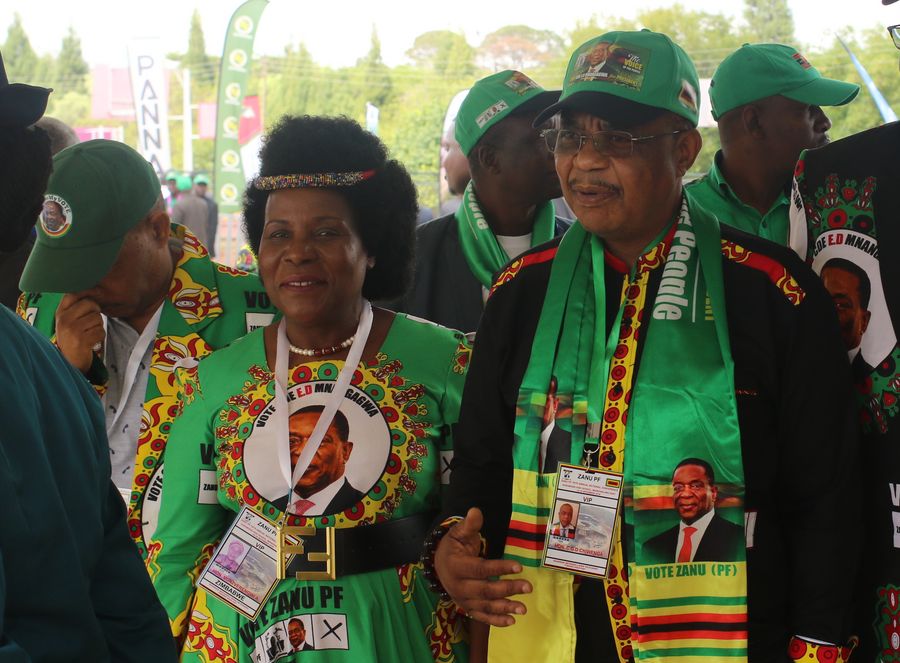
Zimbabwean Vice President Constantino Chiwenga (R, Front) is seen during the National People's Conference of the ruling ZANU-PF party in Goromonzi, Zimbabwe, on Dec. 13, 2019. (Xinhua/Shaun Jusa)
As the year of 2019 is coming to an end, Xinhua reviews Zimbabwe's politics, the economy, new currency, the Cyclone Idai and the outlook of 2020.
By Tichaona Chifamba and Zhang Yuliang
HARARE, Dec. 24 (Xinhua) -- The death of former Zimbabwe President Robert Mugabe on Sept. 6 was one of the biggest event in 2019 for the country, with the year likely to end in almost the same way it began as government junior doctors remained on strike over improved working conditions.
Mugabe died in a Singapore hospital on Sept. 6 and was buried at his rural home in Zvimba, Mashonaland West Province, on Sept. 28 after his family turned down the government's offer to have him buried at the National Heroes Acre in Harare.
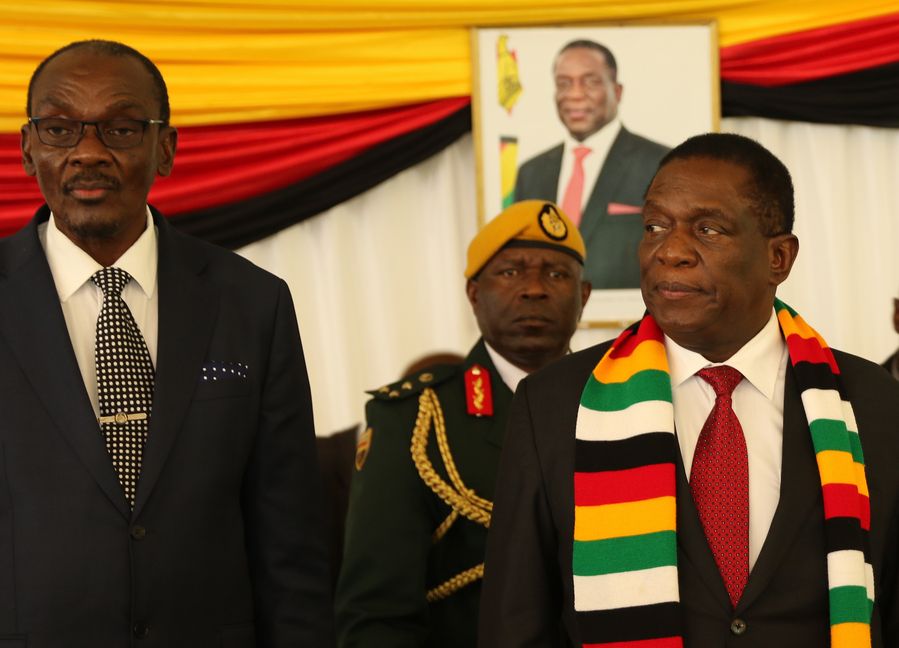
Zimbabwean President Emmerson Mnangagwa (R) addresses to opposition party leaders during a post-election dialogue meeting at State House in Harare, Zimbabwe, Feb. 6, 2019. (Xinhua/Shaun Jusa)
POLITICS
The political climate remained toxic with the two major protagonists - Mnangagwa and opposition MDC leader Nelson Chamisa - relentlessly throwing brickbats at each other following the disputed 2018 presidential election results.
While the country's highest court of law - the Constitutional Court - has since settled the matter by declaring Mnangagwa the winner, Chamisa still argues that the incumbent is illegitimate.
Mnangagwa has since come together with smaller political parties under the Political Actors Dialogue (POLAD) in a bid to address burning political and economic issues.
Recent overtures by former South African President Thabo Mbeki to have a political settlement in the country has been met with enthusiasm in some quarters which think that such a settlement will unlock international goodwill on the country and boost the economy.
While they hope that Mbeki will be able to break the political impasse in the same way he brokered the deal that brought about an inclusive government in 2009, others remain wary and accuse him of having crafted an accord that favored Mugabe ahead of main rival Morgan Tsvangirai.
The opposition leader literally became a sitting duck as Prime Minister until 2013 when the government was dissolved ahead of fresh elections, with Mugabe exercising all the executive powers.
ECONOMY
The economy continued to under-perform with Gross Domestic Product projected to contract by 6.5 percent in 2019 amid crippling power and water shortages.
Foreign direct investment remained elusive and Zimbabweans endured persistent increases in prices of basic commodities, fuel and communication services with the International Monetary Fund saying that the annual rate of inflation stood at 300 percent in August.
Local producers and retailers have been feeling the pinch of an inflationary environment where they are selling fewer units.
Despite the unrelenting increases in fuel prices which have been going up almost every week, the commodity remained in short supply most of the year with motorists spending long hours queuing up near service stations waiting for deliveries.
A decision by the government in June to ban the use of foreign currency as legal tender alongside the local Bond Note left many companies in turmoil, especially after the Reserve Bank of Zimbabwe had removed the 1:1 parity between the Bond Note and the U.S. dollar in February.
The ban was an apparent bid to arrest galloping increases of prices of basic commodities and other goods and services.
Finance and Economic Development Minister Mthuli Ncube said, however, that the government was working to end cash shortages, eliminate cash discounts and the multi-tier pricing system and punish traders who continue trading on the multi-pricing system.
Ncube noted that the economy had been battered by the severe 2018/19 drought which caused food insecurity and depressed electricity generation, with negative spillovers to the rest of the other sectors of the economy.
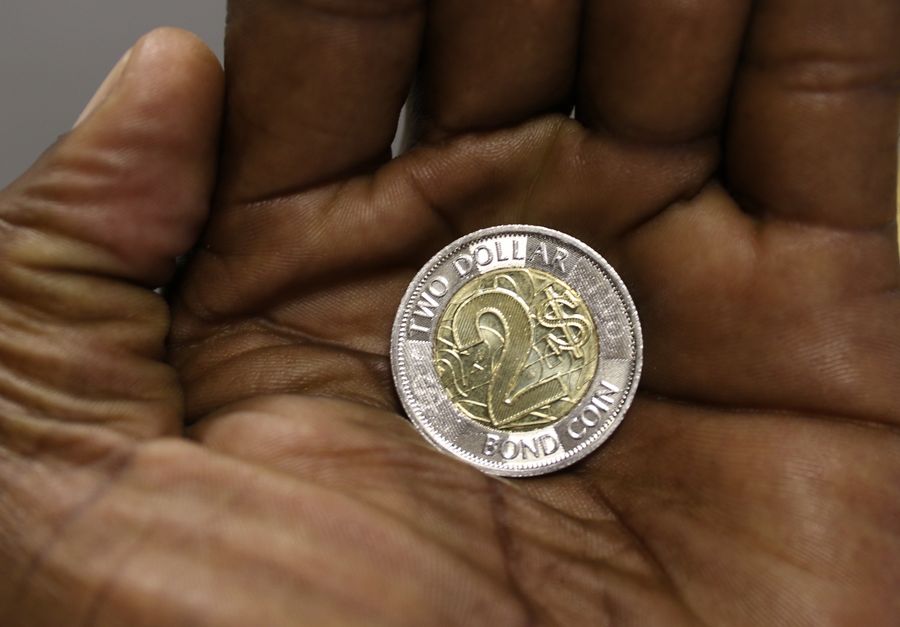
The photo shows the new 2 dollar bond coin issued by the Reserve Bank of Zimbabwe (RBZ) to ease current cash shortages in Harare, Zimbabwe, on Nov. 12, 2019. (Xinhua/Shaun Jusa)
NEW CURRENCY
In November, Reserve Bank of Zimbabwe Governor John Mangudya announced the introduction of the new notes to ease current cash shortages.
He said the new notes totaling 1 billion Zimbabwe dollars would be gradually injected into the economy over the next six months to curtail fuelling inflation.
The new notes circulates alongside the surrogate bond notes that were introduced in 2016.
However, the introduction of Zimbabwe dollars did not ease the cash shortages as thousands of Zimbabweans continued to endure long hours waiting in queues for cash at the banks.
The shortage of cash has led to retailers and other service providers employing a multi-tier pricing system offering cash discounts and literally punishing those paying by electronic means.
President Emmerson Mnangagwa said in December that new 10 and 20 Zimbabwe dollar notes will be introduced in the next few days as the government moves to contain persistent cash shortages.
He reiterated calls for Zimbabweans to support the local currency, saying sole use of the local currency in domestic trade was imperative for the country's economic development, especially considering that Zimbabwe, unlike its neighbors, was not receiving any financial assistance from multilateral financial institutions due to Western sanctions.
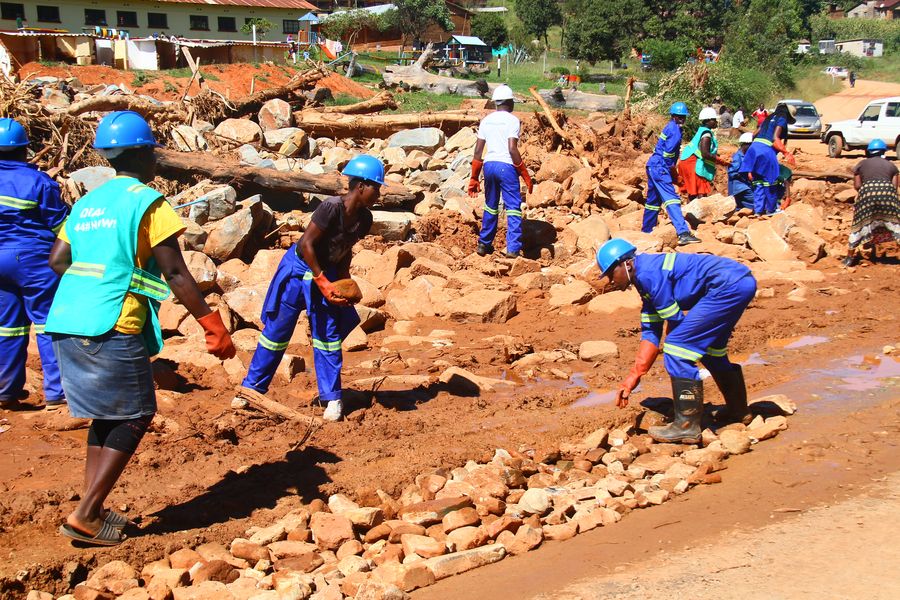
Local residents clear up the road after Cyclone Idai brought a mudslide in Ngangu village, Chimanimani, Zimbabwe, April 4, 2019. The Zimbabwean government has reported 299 deaths and 300 people missing in Cyclone Idai. (Xinhua/Stringer)
CYCLONE IDAI
Two tragedies involving flooding also occurred at the beginning of the year, the first being the death in early February of more than 50 miners in Kadoma when a nearby dam burst its wall in heavy rains and flooded the shafts they were working in.
The second occurred in March when Cyclone Idai hit the country together with Mozambique and Malawi.
In Zimbabwe, the tropical cyclone killed more than 260 people and affected more than 270,000 others mainly in Manicaland Province to the south-east where livestock, crops, schools, bridges and other infrastructure were destroyed.
The government, together with United Nations agencies in April launched an appeal for 60 million U.S. dollars to help the affected people who were in dire need of food, shelter, water and sanitation.
The 60 million dollars was on top of a 234 million U.S. dollar appeal for 2.2 million of the over 5 million people who were also in need of food, water and sanitation following the serious drought in the 2018/19 season.
The World Food Program announced on Wednesday that nearly 8 million people in Zimbabwe will be hungry come January.
OUTLOOK
GDP is projected to grow by 3 percent with Mnangagwa assuring Zimbabweans that the worst was over and that the future promised a prosperous economy for everyone.
Speaking in the City of Mutare at the commissioning of an urban renewal project mid December, Mnangagwa acknowledged that the "austerity for prosperity" measures implemented by his government had caused suffering among the populace.
"Our policies have created problems, but we are certain of where we are going. To achieve our goal we have to take measures which are painful, but it will pass and everyone will be happy."
"Nothing comes cheaply. We have to tighten our belts and I am happy that the worst is over! The bad is past us. Things are going to improve," he said.
The government is also importing grain to supplement its stocks but will need more international support to ensure that citizens are food secure.
Many farmers already fear that the current agriculture season will also be bad after poor rains in the first half while weather experts have predicted that the second one will have normal to below normal rainfall. ■
