



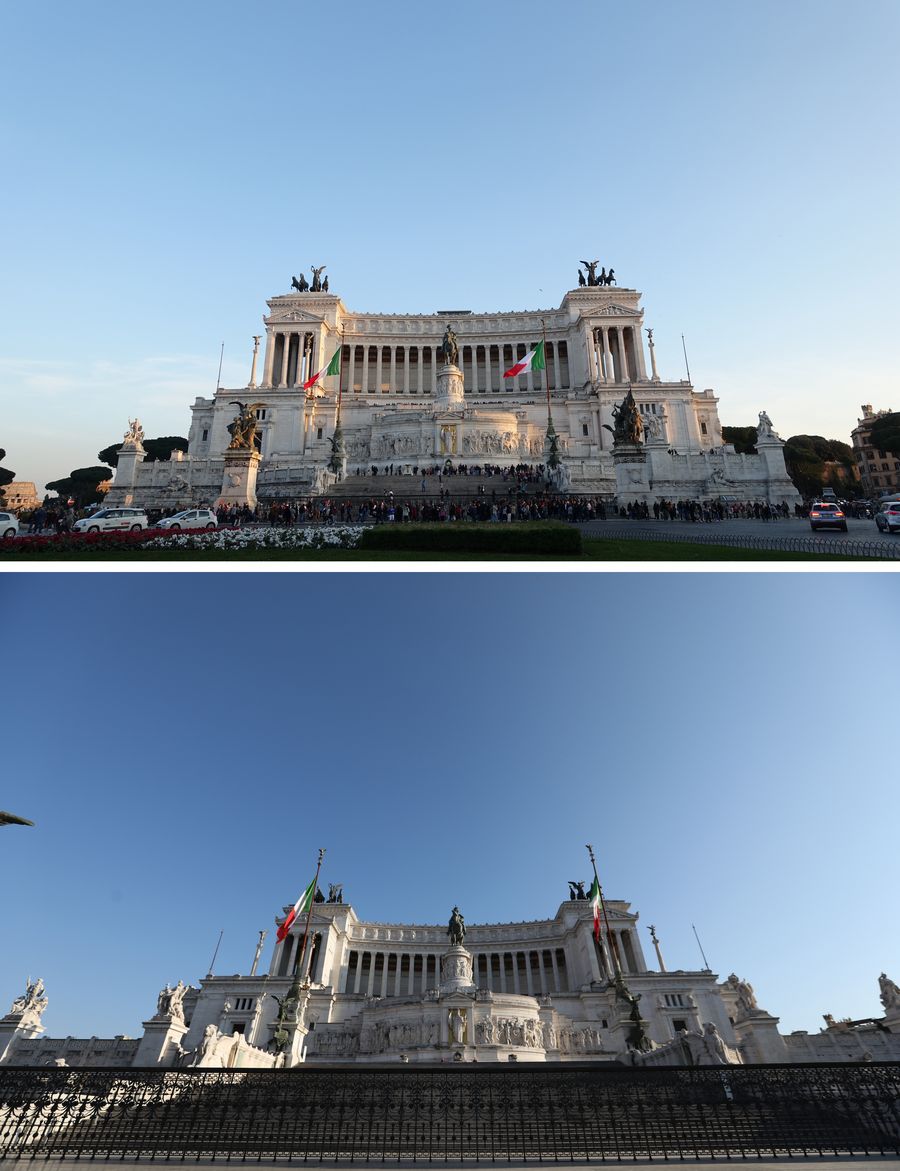
Combo photo shows Piazza Venezia on March 4, 2019 (top) and March 16, 2020 in Rome, Italy.(Xinhua/Cheng Tingting)
The decree of the Italian government putting the country under lockdown went into effect on March 10, in a bid to prevent the ongoing coronavirus epidemic from spreading.
Below is a first-person account from Stefania Fumo, a journalist resident in Rome, reviewing the week under lockdown.
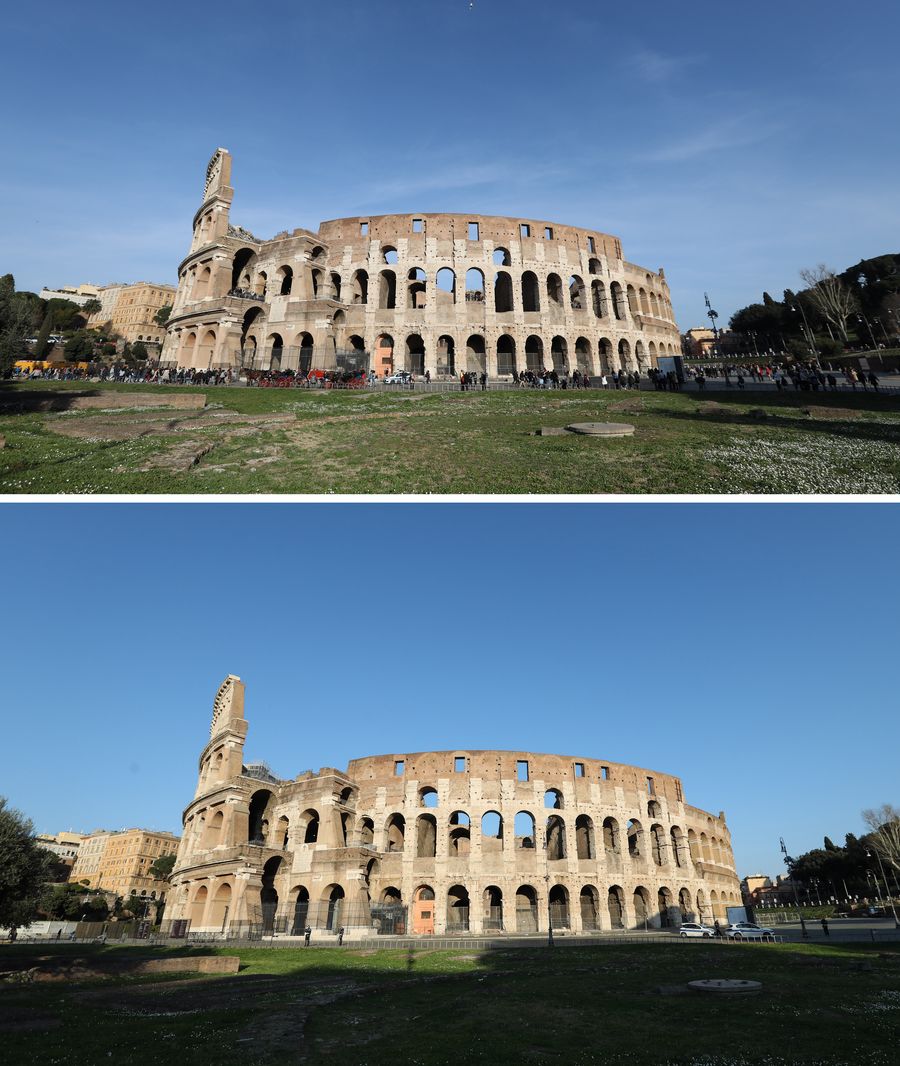
Combo photo shows the Colosseum on March 6, 2019 (top) and March 16, 2020 in Rome, Italy.(Xinhua/Cheng Tingting)
by Stefania Fumo
ROME, March 17 (Xinhua) -- It has been only a week since our prime minister, Giuseppe Conte, announced the whole of Italy is under anti-coronavirus lockdown, but life as we knew it before the emergency already seems remote.
In Rome, spring came early: the trees are flowering, the sky is blue, temperatures are mild. Normally, Romans would be thronging outdoor cafes, bars, and restaurants, taking their kids for picnics in their favorite park, or sitting on benches in the sun near one of the city's many centuries-old sculptured fountains.
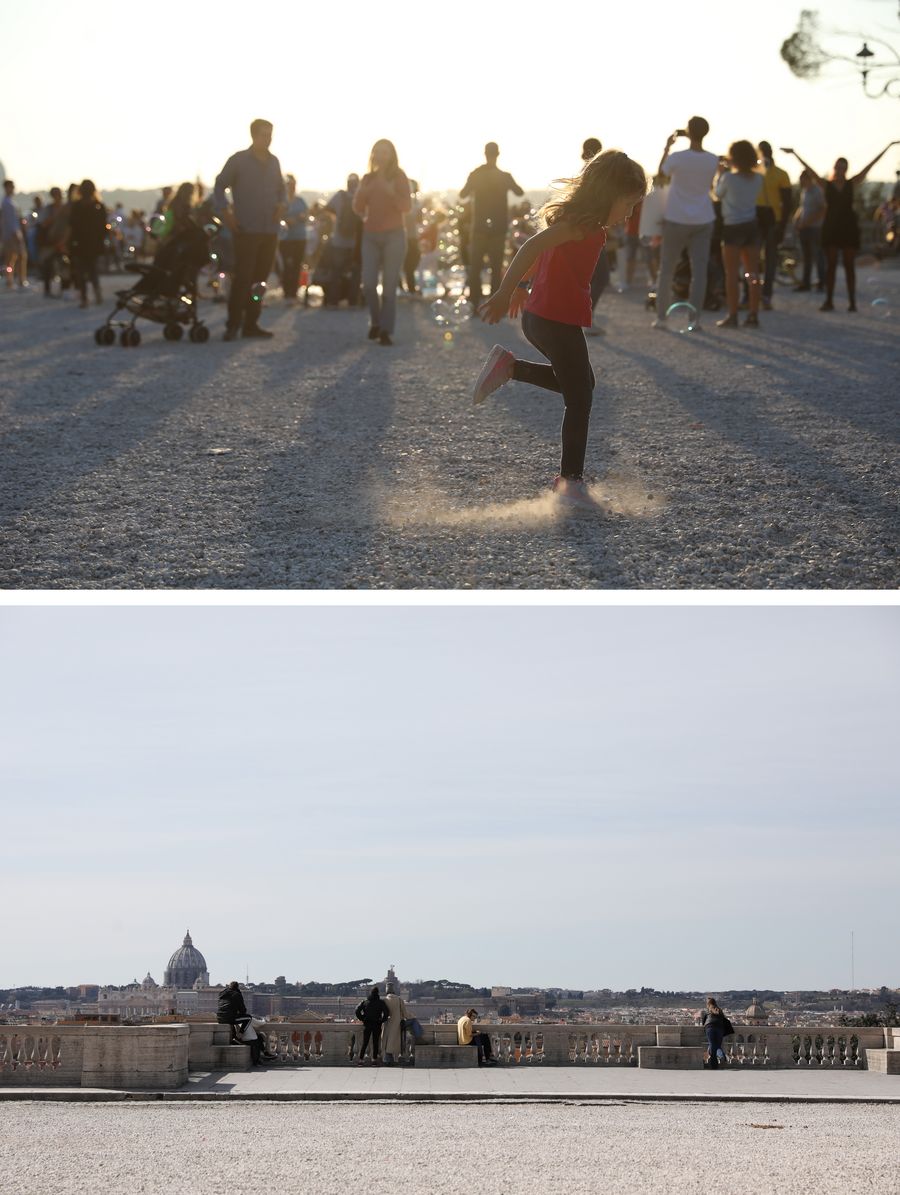
Combo photo shows the Pincio Hill on Oct. 1, 2018 (top) and March 10, 2020 in Rome, Italy.(Xinhua/Cheng Tingting)
Now an eerie silence blankets this usually noisy, gregarious city. The entrance to the children's playground in my local park has been cordoned off with police tape. Municipal officers appear at regular intervals, telling old ladies to get off the benches and go home, and warning teens that they are not allowed to shoot hoops in the basketball court.
When I walk my dogs -- one of a handful of lawful reasons to be outside one's home, along with buying groceries, going to the doctor, or going to work in an essential sector such as public medicine or transportation -- I can hear the sound of the Aniene River flowing by my neighborhood in northern Rome. Usually, this sound is muffled by the noise of cars.
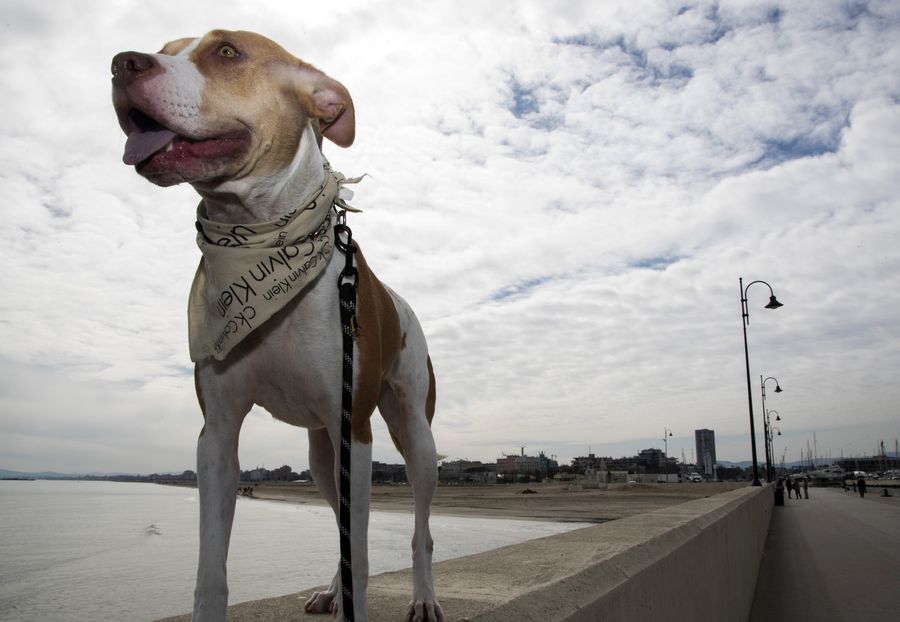
A dog stands beside the sea in Rimini, Italy, March 9, 2020.(Photo by Elisa Lingria/Xinhua)
Movie theatres, museums, boutiques and beauty salons have become a thing of the past, and this makes me appreciate how fortunate we were until just a week ago to have easy access to so much -- hairdressers and clothes, art exhibits and dinners in restaurants.
"The practical effects of the shutdown and the restrictions are very few," Andrea Buzzacchi, a 54-year-old optician who runs a family-owned eyewear store, told me.
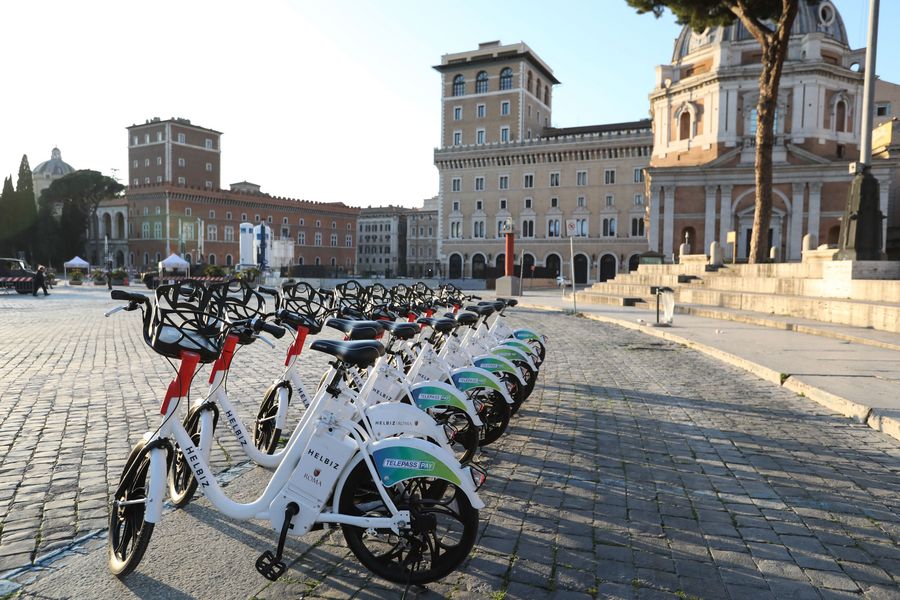
Sharing bikes sit idle on Piazza Venezia in Rome, Italy, March 16, 2020.(Xinhua/Cheng Tingting)
"Essential goods are not too hard to find, but what is most affected is my state of mind. The situation creates an atmosphere of general anxiety, and I wonder what will happen when all this is over: will my business survive this economic blow? Will there be more situations like this one in the future? These are tough questions to which I don't know the answer," Buzzacchi said. "Right now, I have no income of any kind, and I am surviving on my scant savings."
He also said the government had "no choice" but to decree the national shutdown, which began on March 10 and runs until April 3. "Given what happened in China, I think the government should have done it sooner," Buzzacchi said.
Angela Angelucci, a 62-year-old psychologist and psychotherapist, looked on the positive side in spite of a drastic slowdown in her practice, with cancellations from many patients.
"We must look at the things we can still do from within our homes, and not the ones we can't -- such as reading, writing, and staying in touch with our friends," she told me.
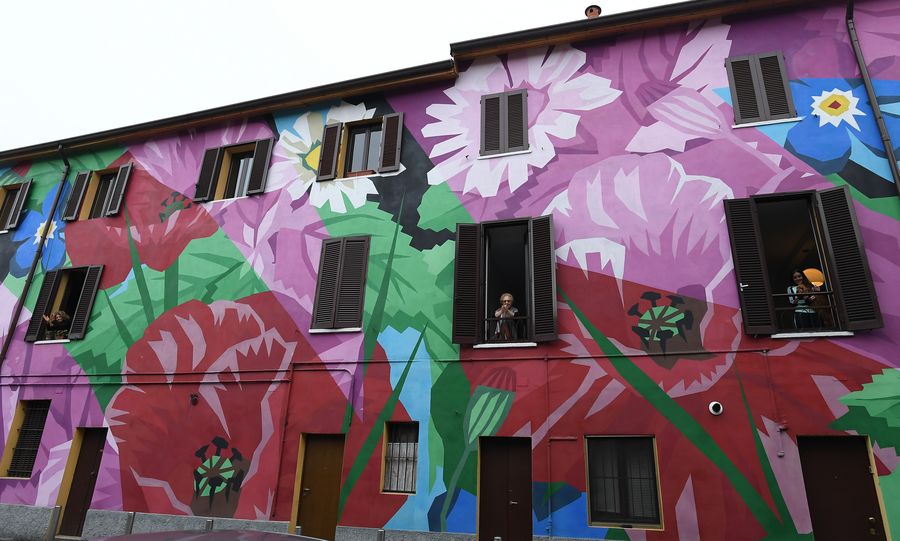
People participate in a flash mob to cheer up the city in Milan, Italy, on March 14, 2020.(Xinhua)
"Fear is a necessary emotion at a time like this because it protects us, but we must not panic, because panicking makes us more vulnerable and lowers our immune defenses," Angelucci added.
She also said the government did the right thing in imposing the current restrictions "given the emergency and the fact that there is no vaccine or cure" for coronavirus infection.
She believes that despite the economic, personal and professional hardships caused by the lockdown, the experience may change people for the better on a deeper, collective level.
"It may make us realize that the values of sharing, unity, respect and equality are fundamental," she said.■
