



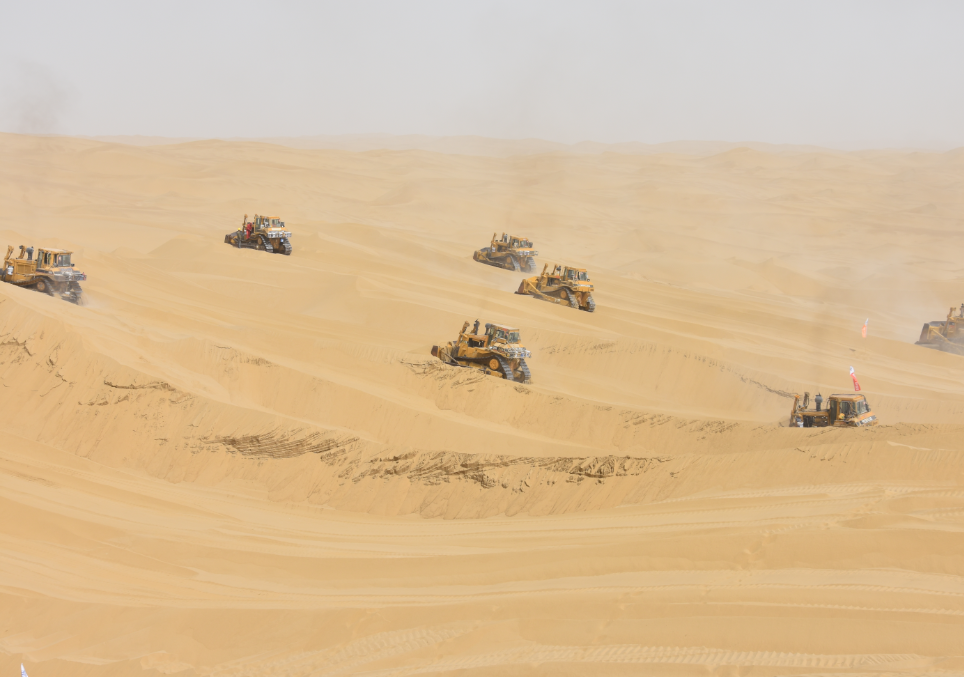
Construction site of the Yuli-Qiemo highway in northwest China's Xinjiang Uygur Autonomous Region, April 13, 2020. (Photo by Huang Mengwen)
URUMQI, April 16 (Xinhua) -- Work on the third highway across the Taklimakan, China's largest desert, is back on track. Construction was given the green light once the COVID-19 outbreak had receded in northwest China's Xinjiang Uygur Autonomous Region.
Cutting across the world's second-largest flow desert, the 333-km long highway will connect Qiemo County on the southern edge of the Taklimakan and Yuli County on the north.
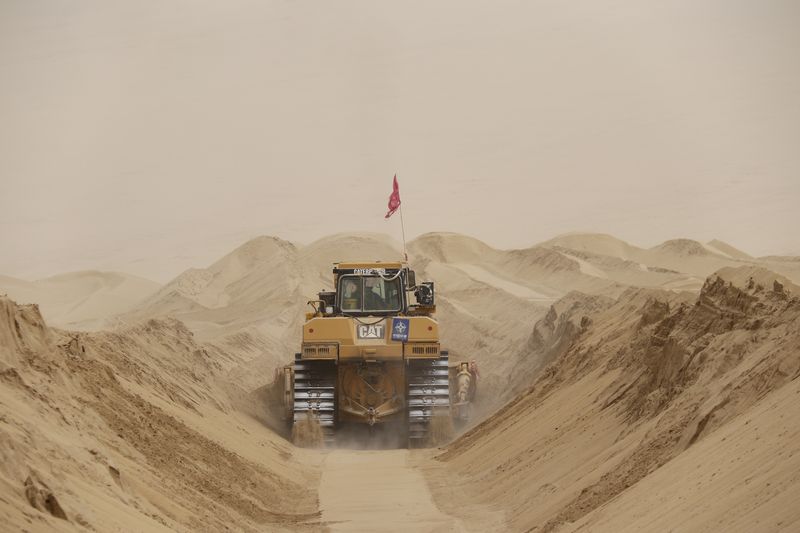
Construction site of the Yuli-Qiemo highway, April 13, 2020. (Photo by Huang Mengwen)
The first highway across the Taklamakan, which runs north to south for 522 km from Lunnan to Minfeng county, was opened in 1995 to facilitate oil exploration. At 522-km long, it is the world's longest desert highway.
The second highway, which stretched for 424 km, opened to traffic in 2007. It linked the resource-rich and densely-populated city of Hotan, in south Xinjiang, and Aral, an underdeveloped new city on the northern edge of the desert.
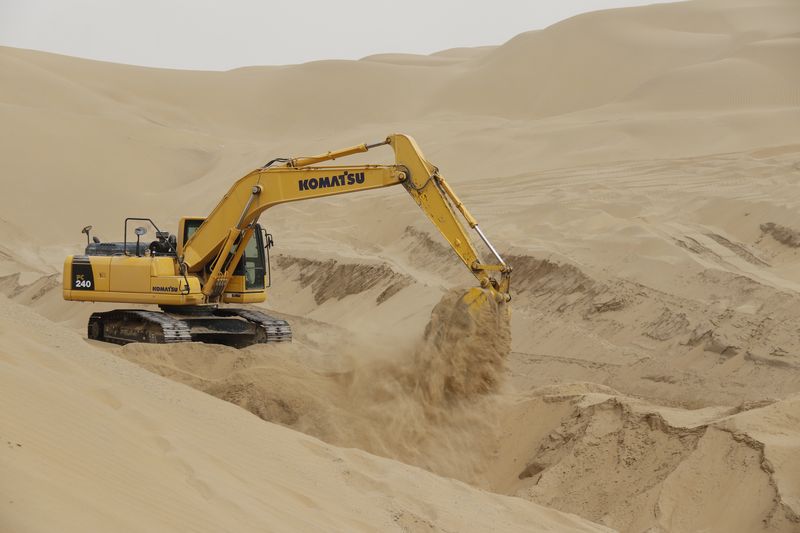
Construction site of the Yuli-Qiemo highway, April 13, 2020. (Photo by Huang Mengwen)
The new highway is expected to open to traffic in 2021.
The word "Taklamakan" means "go in and you won't come out" in the Uygur tongue. When the road is finished, however, people from the two counties in the northwestern region will happily venture into the 337,000-square-km desert, after generations of bypassing it.
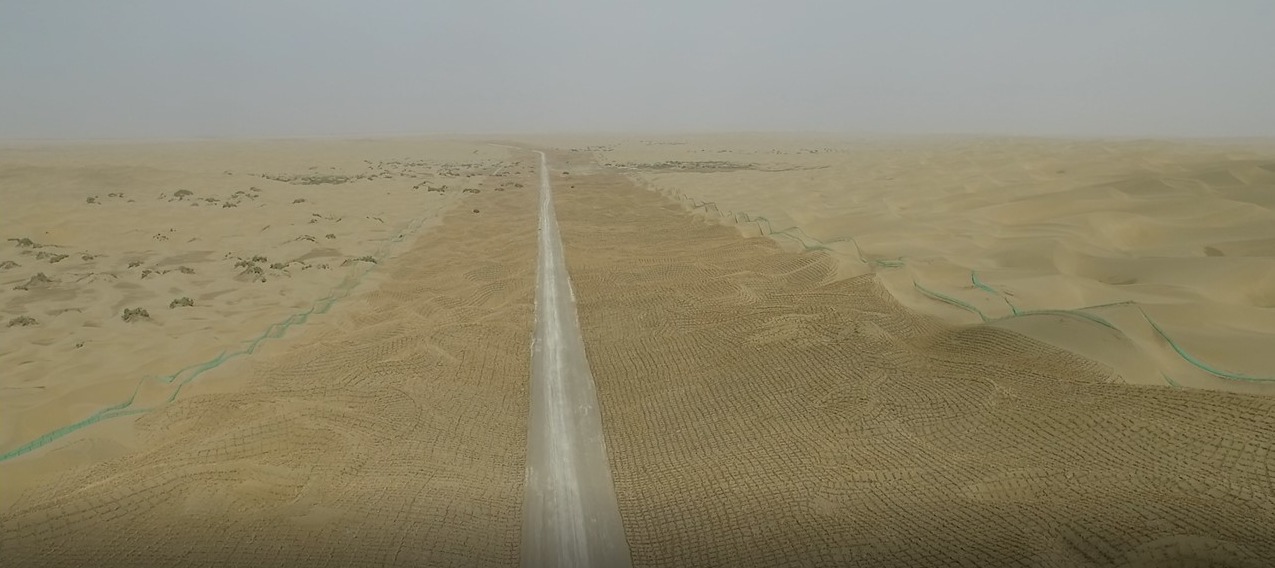
Construction site of the Yuli-Qiemo highway, April 13, 2020. (Photo by Huang Mengwen)
Construction of the Yuli-Qiemo highway is much more difficult than the previous two, according to the project engineers. The road will pass 32 dense, high dunes, with the highest towering more than 100 meters into the sky. Along the route will be 28 slacks, huge ravines between the dunes, the widest is 12 km across. ■
