



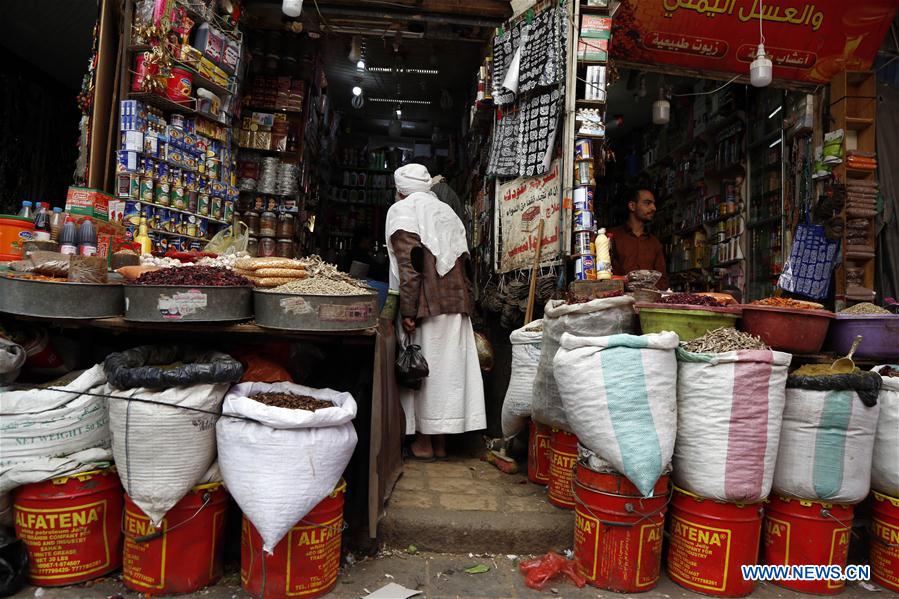
A man shops at a market in Sanaa, Yemen, April 17, 2020. UN Undersecretary-General for Humanitarian Affairs Mark Lowcock on Thursday rung alarm over Yemen's economy amid fears for a COVID-19 outbreak. In a virtual briefing to the UN Security Council, he warned that the disruption of imports and the expected drop of remittances as a result of COVID-19, as well as the drying up of foreign exchange as a result of lower oil prices, will bring disasters. (Photo by Mohammed Mohammed/Xinhua)
UNITED NATIONS, April 16 (Xinhua) -- UN Undersecretary-General for Humanitarian Affairs Mark Lowcock on Thursday rung alarm over Yemen's economy amid fears for a COVID-19 outbreak.
In a virtual briefing to the Security Council, he warned that the disruption of imports and the expected drop of remittances as a result of COVID-19, as well as the drying up of foreign exchange as a result of lower oil prices, will bring disasters.
Yemen depends almost entirely on imports for supplies. Commercial cargo is still entering the country despite increased scrutiny to reduce the risk of COVID-19. In March, commercial food and fuel imports into the seaports of Hodeidah and Saleef fell by 9 percent, said Lowcock.
Although the drop is a matter of concern, it is within normal fluctuations. But Longer-term economic prospects are more alarming, he warned.
Imports must be purchased in hard currency, which means the government needs foreign exchange to finance them. And to afford those imports, people need the Yemeni rial to maintain a reasonable exchange rate.
The impact of COVID-19 on the global economy will make this more difficult. Oil prices have fallen. Because the government depends on oil as a main source of revenue, officials may soon find it much harder to finance imports, to pay civil servant salaries or support the exchange rate, said Lowcock.
Rapid, uncontrolled currency depreciation was a key factor in bringing Yemen to the brink of widespread famine 18 months ago. The World Bank warns that a similar risk of currency collapse persists today, said Lowcock.
In the past, remittances have served as a last defense for millions of vulnerable families. Economists estimate that Yemenis abroad send home more than 3 billion U.S. dollars a year, making remittances the largest source of hard currency in local markets, he noted.
But COVID-19 is affecting the economies where expatriate Yemenis work. A group of Yemeni economists and private-sector leaders recently projected that remittances could drop by as much as 70 percent in the coming months. "This places us in uncharted territory."
Lowcock asked for bold action to stabilize the economy before it is too late. This should include regular foreign exchange injections that have proved effective in the past, as well as measures to increase quantities of affordable food and other consumer goods in markets across Yemen.
COVID-19 is presenting a unique opportunity to reinvigorate the political process and move toward peace. It is, though, also promising severe repercussions if that does not happen, he warned.
