



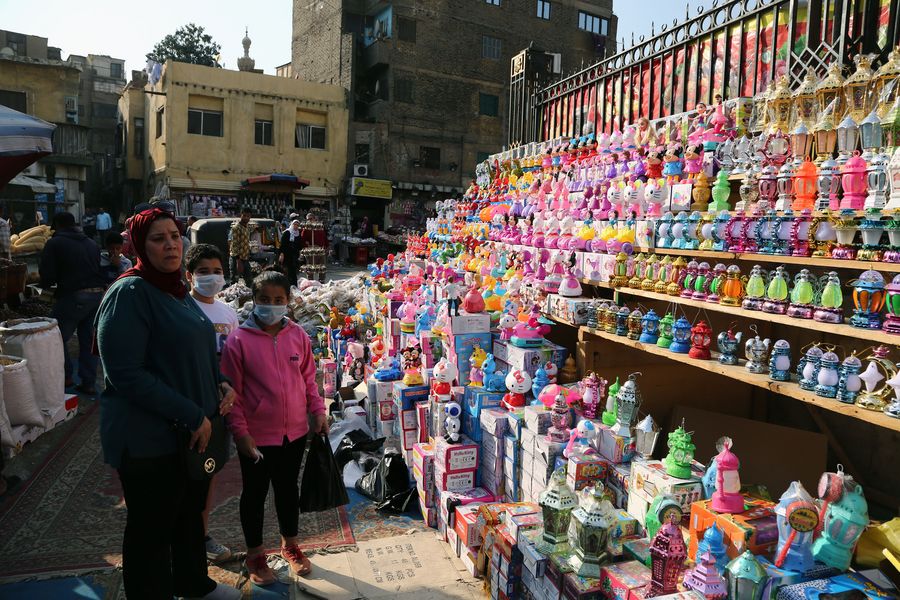
People are seen at a lantern bazaar in Cairo, Egypt on April 12, 2020. (Xinhua/Ahmed Gomaa)
As the Muslim holy month of #Ramadan draws near amid #coronavirus pandemic, Egyptians are trying to buy some colorful traditional lanterns for household decoration or entertainment.
CAIRO, April 17 (Xinhua) -- At the popular lantern bazaar in Sayyida Zainab neighborhood in Egypt's capital Cairo, colorful traditional lanterns are hanging or being neatly displayed on street stands and shelves. However, the sales didn't seem as good as in previous seasons ahead of the Muslim holy month of Ramadan expected to start later in April.
"The lantern market suffers recession this season because of the nighttime curfew imposed nationwide over the ongoing coronavirus pandemic," said Momen Mamdouh, a 30-year-old lantern salesman who has been selling lanterns in the annual season since childhood.
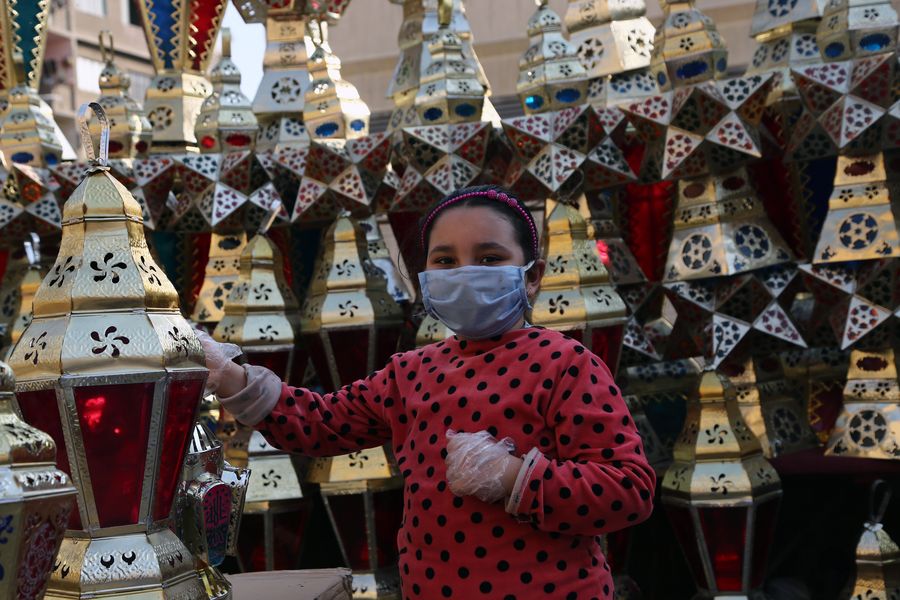
A girl is seen at a lantern bazaar in Cairo, Egypt on April 12, 2020. (Xinhua/Ahmed Gomaa)
Buying Ramadan lanterns is a centuries-old Egyptian tradition and a source of joy for adults and children alike, for the large lanterns are used for decorating streets and the front doors and corridors of coffee shops, restaurants and hotels, while small ones are used as toys for children.
But since all entertainment facilities, restaurants, hotels and malls have been temporarily closed over COVID-19 concerns and the country is going through a 10-hour dusk-to-dawn curfew until April 23, the lantern market has lost a lot of its customers this season.
"For me, the lantern sales this year are less than half our sales in previous seasons, because we used to open 24/7 ahead of Ramadan but now the partial curfew starts at the time we used to start work," Mamdouh told Xinhua at his stand in the bazaar.
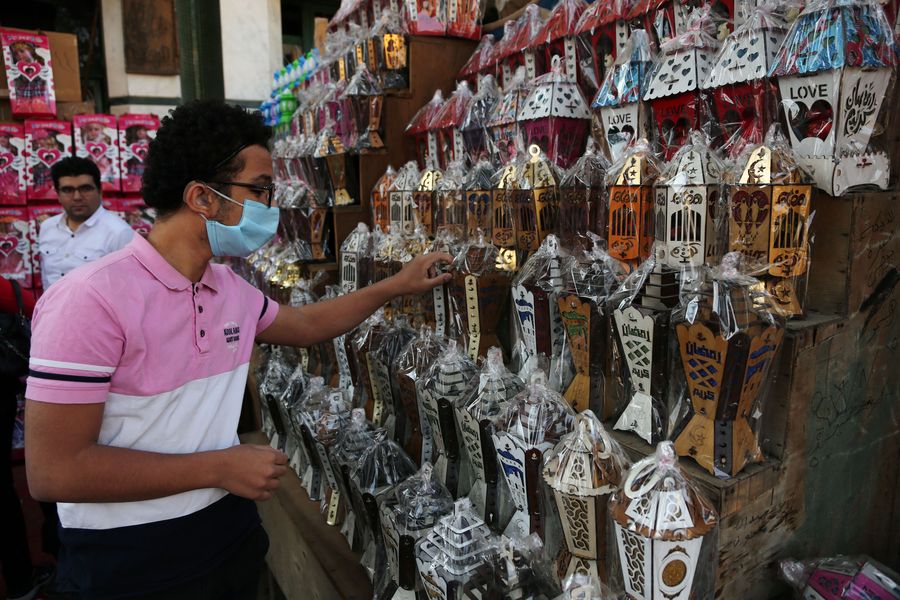
A man buys traditional lanterns at a lantern bazaar in Cairo, Egypt on April 12, 2020. (Xinhua/Ahmed Gomaa)
"We understand the seriousness of the situation and we care more about combating this pandemic, hoping this crisis will be over soon in the whole world," he said.
Made of glass and tinplate or metal, traditional Ramadan candle-lit lanterns, known in Arabic as fanoos, were used to light up Egypt's dark streets during the Fatimid caliphate hundreds of years ago, before they were used for seasonal decoration or as toys for kids to play with in groups during Ramadan evenings.
Rashwan Abdel-Hafez, a veteran traditional handmade lantern maker who owns a workshop in Sayyida Aisha neighborhood in Cairo, said the ongoing COVID-19 pandemic has not affected his business alone, but "has caused recession to many businesses worldwide."
"At this time of the year, we used to work day and night ahead of Ramadan due to massive sales, but this year our sales are about 40-percent fewer than usual," said the handmade lantern maker whose sons work with him at his workshop.
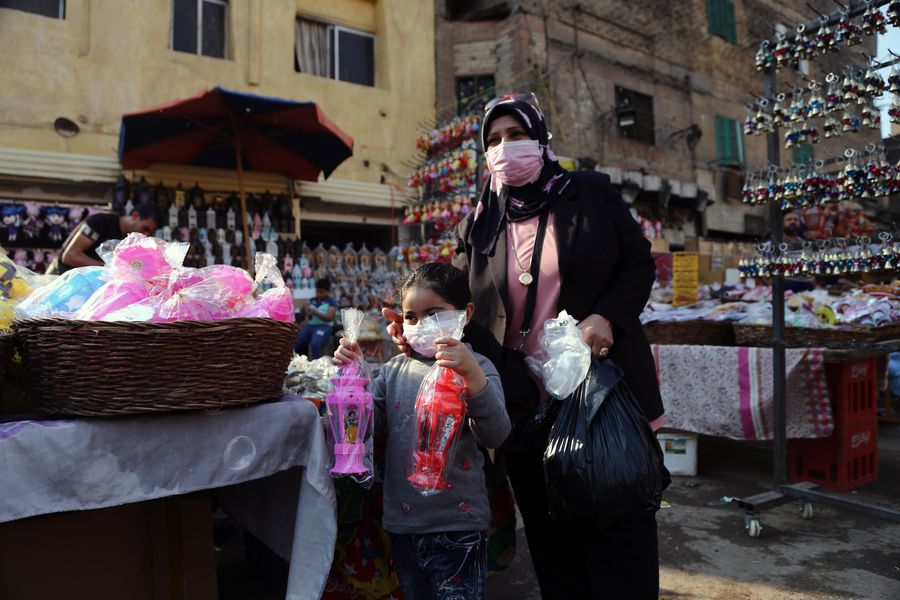
A girl shows traditional lanterns at a lantern bazaar in Cairo, Egypt on April 12, 2020. (Xinhua/Ahmed Gomaa)
Luckily, before the crisis started a few months ago, Abdel-Hafez sold some of his handmade lanterns to other provinces and merchants from Saudi Arabia, Kuwait, Jordan and other Arab states. However, he said his clients may not sell most of them this year, which is likely to affect his seasonal sales next year as well.
Despite the recession and the partial lockdown in Egypt, some Egyptians still like to purchase colorful handmade glass, tin lanterns for home or street decoration or modern singing toy lanterns for their children to play with.
"I've come to the bazaar to buy lanterns but I have my precautions as you see. I am wearing a medical face mask and I have alcohol disinfectant spray and wipes with me too," said Amal, a 50-year-old, who was accompanied by her little granddaughter who also wore a face mask. ■
