



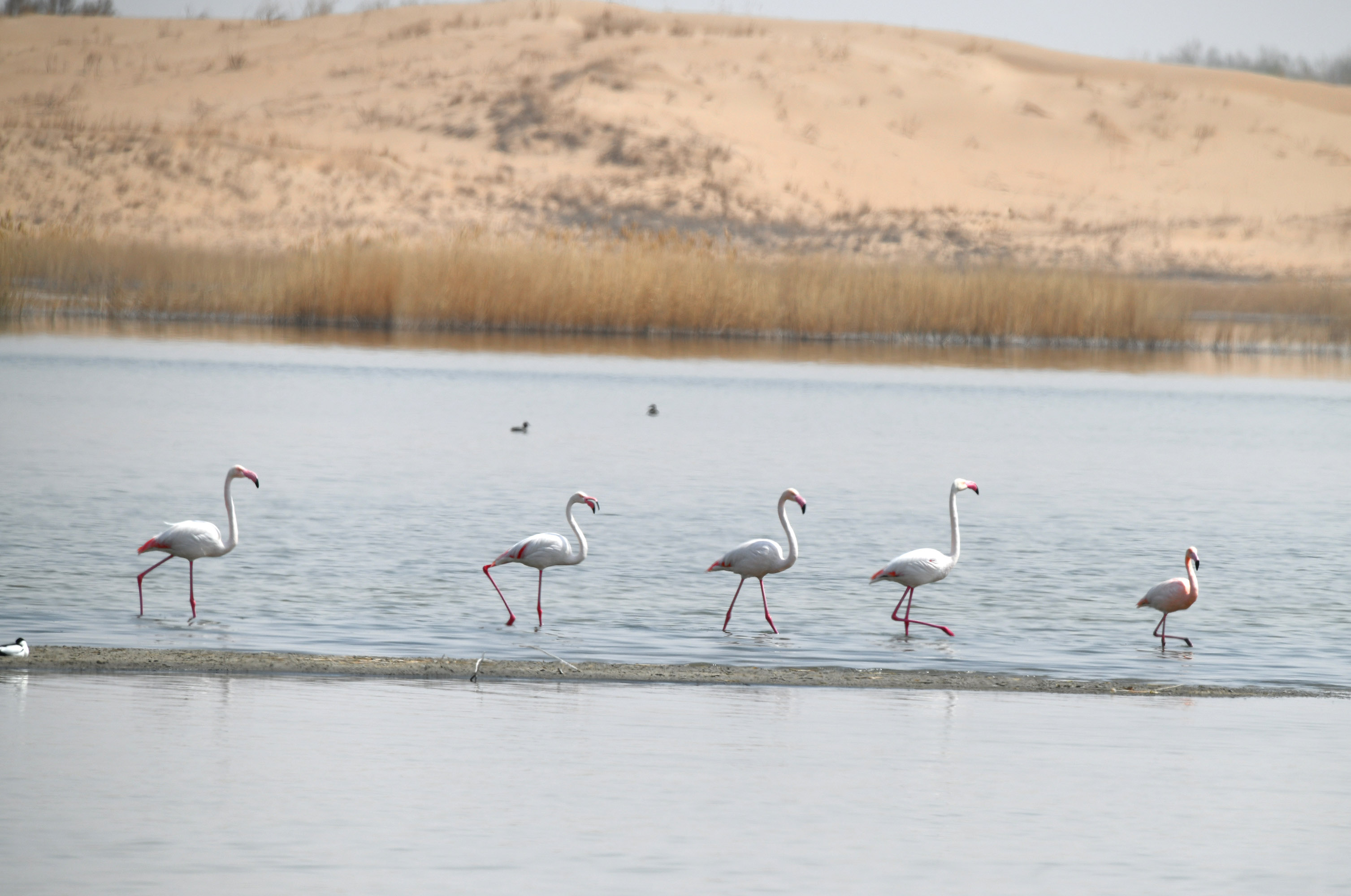
Five flamingos rest on a lake in the Ulan Buh Desert, northern China's Inner Mongolia Autonomous Region, April 16, 2020. (Xinhua/Li Yunping)
Welcome back to the desert lake!
HOHHOT, April 21 (Xinhua) -- Police in northern China's Inner Mongolia Autonomous Region have spotted five flamingos on a lake in the Ulan Buh Desert, the eighth-largest desert in China, during their recent patrol.
This is the second year that the migratory birds have visited the area.
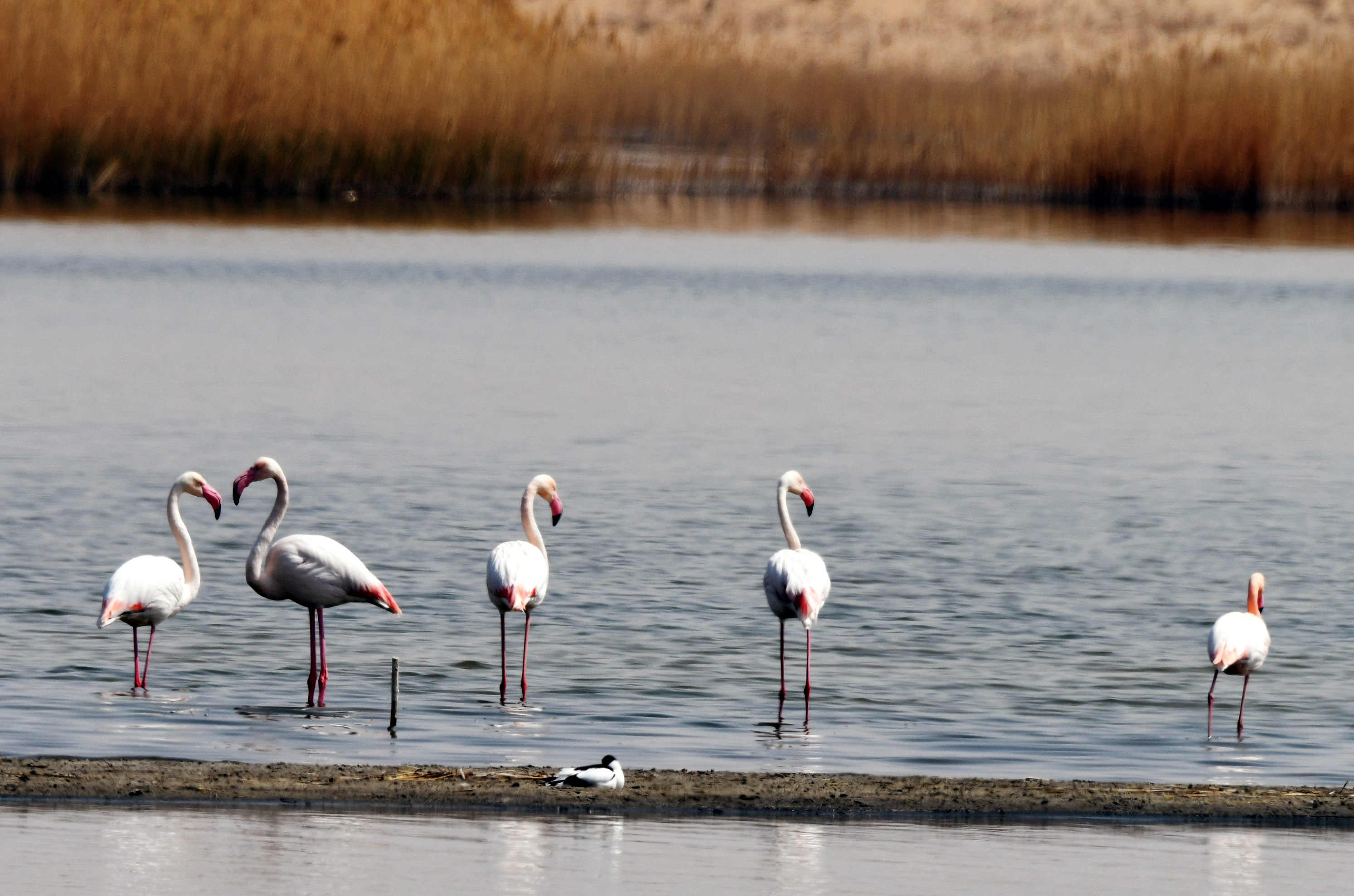
Five flamingos rest on a lake in the Ulan Buh Desert, northern China's Inner Mongolia Autonomous Region, April 16, 2020. (Xinhua/Li Yunping)
Ma Xuexian, a forest police officer in Dengkou County, said they have reinforced patrols around the lake to prevent human activities from interfering with the flamingos, in hopes that the place would become a long-term habitat for the rare birds.
Ma said flamingos first appeared at the lake in April 2019.
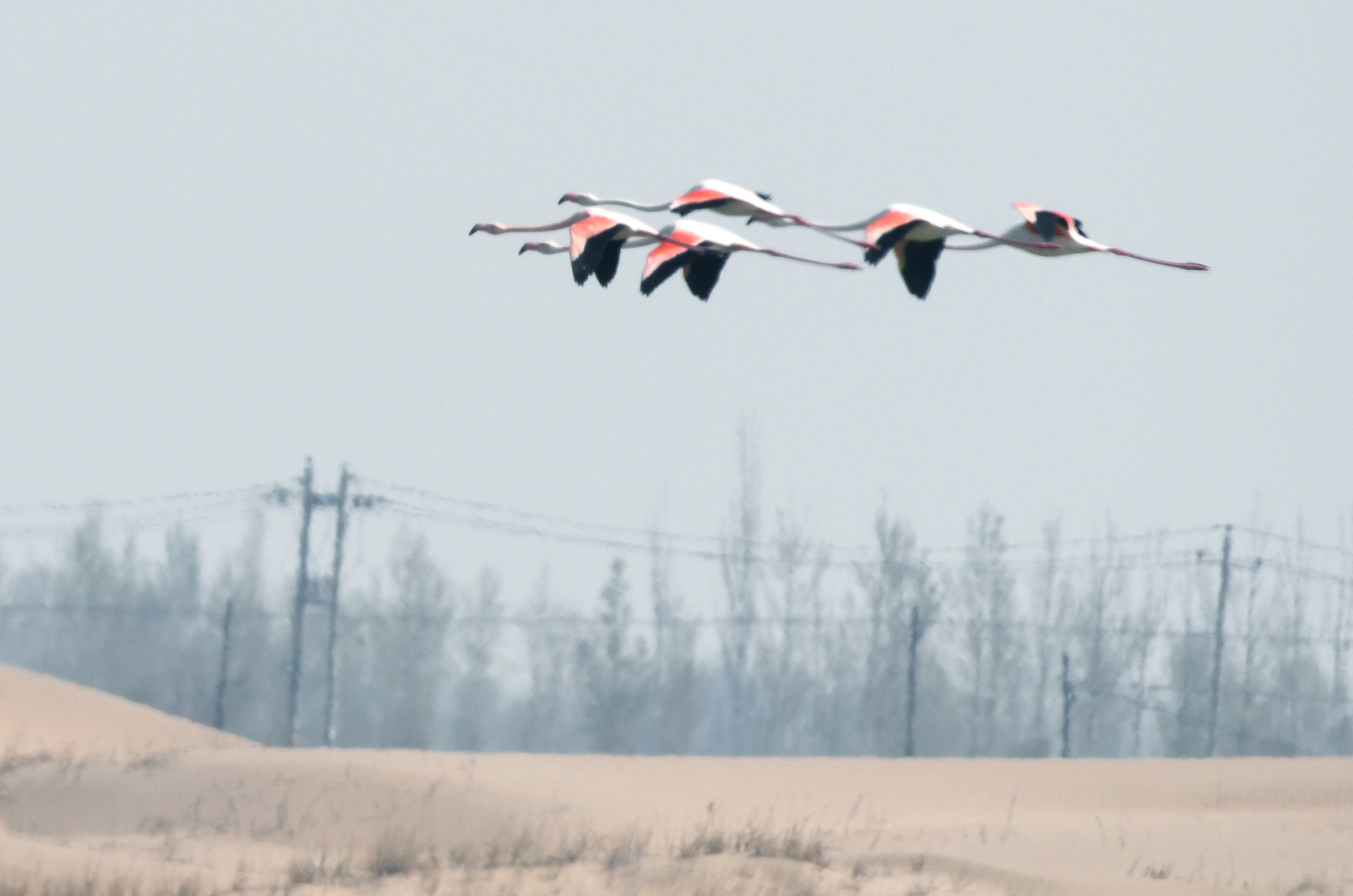
Five flamingos fly over a lake in the Ulan Buh Desert, northern China's Inner Mongolia Autonomous Region, April 16, 2020. (Xinhua/Li Yunping)
The red storks were listed on the International Union for Conservation of Nature Red List of threatened species in 2013.
The desert region is located on one of the three migration routes for migratory birds that pass through Inner Mongolia.
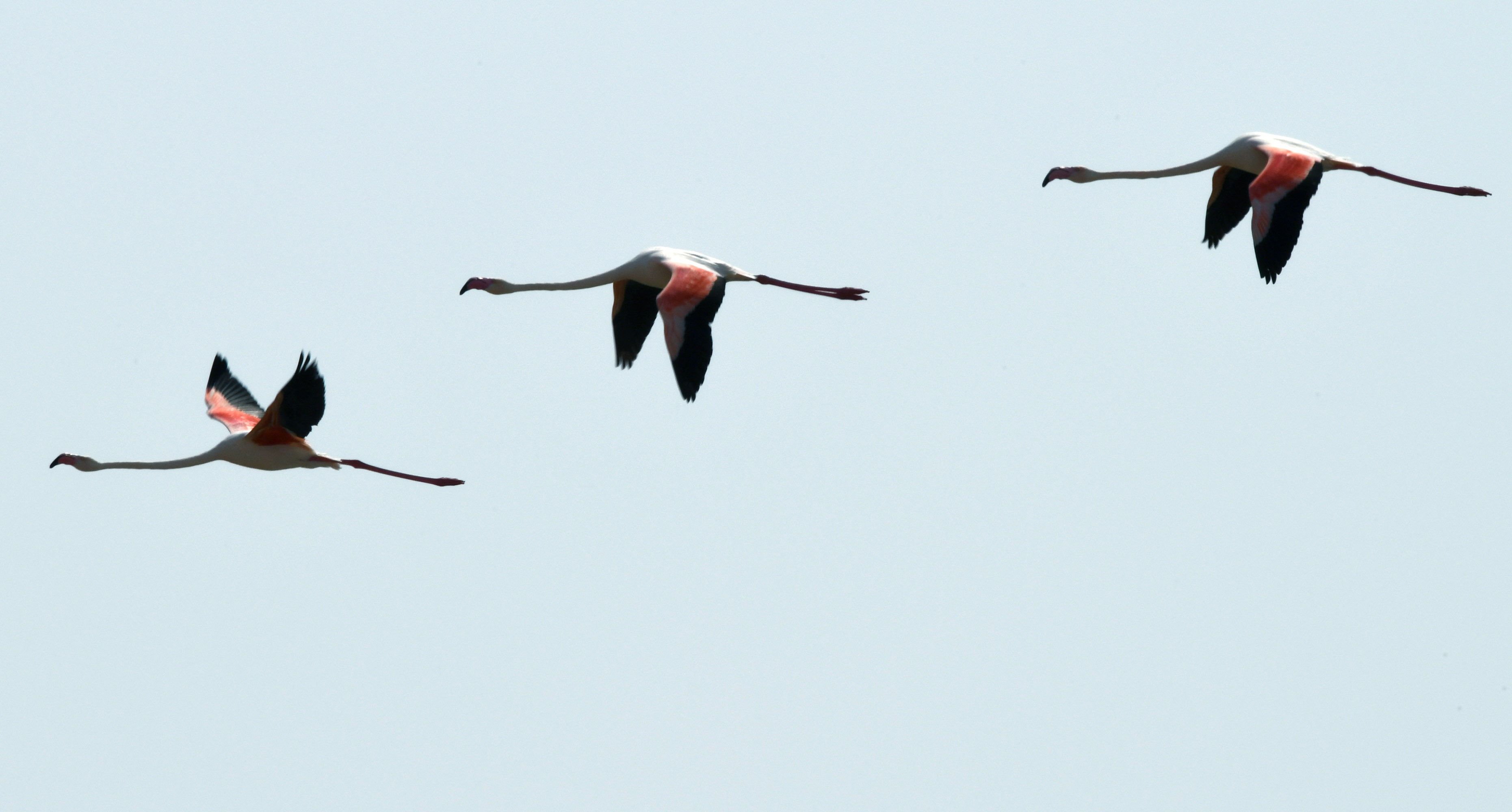
The flamingos fly over a lake in the Ulan Buh Desert, northern China's Inner Mongolia Autonomous Region, April 16, 2020. (Xinhua/Li Yunping)
The Ulan Buh Desert covers a total area of 1 million hectares, with nearly one-third of its area in Dengkou. After 70 years of ecological management, more than 180,000 hectares have been planted with vegetation, which forms an ecological barrier.
With the improvement of the local ecological environment, more and more birds have made it a migratory station, Ma said. ■
