



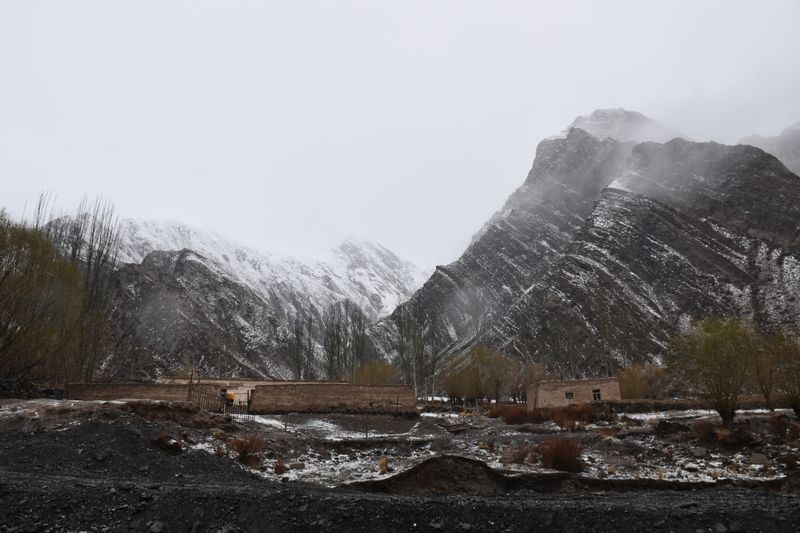
A view of the snow-covered mountains on the Pamir Plateau in the county of Akto, northwest China's Xinjiang Uygur Autonomous Region, April 20, 2020. (Xinhua/Gao Han)
by Xinhua writers Xue Yanwen and He Zhanjun
URUMQI, April 28 (Xinhua) -- Elite runners can easily finish 800 meters within two minutes. For residents of Hongxin village in Xinjiang Uygur Autonomous Region, northwest China, it took six decades.
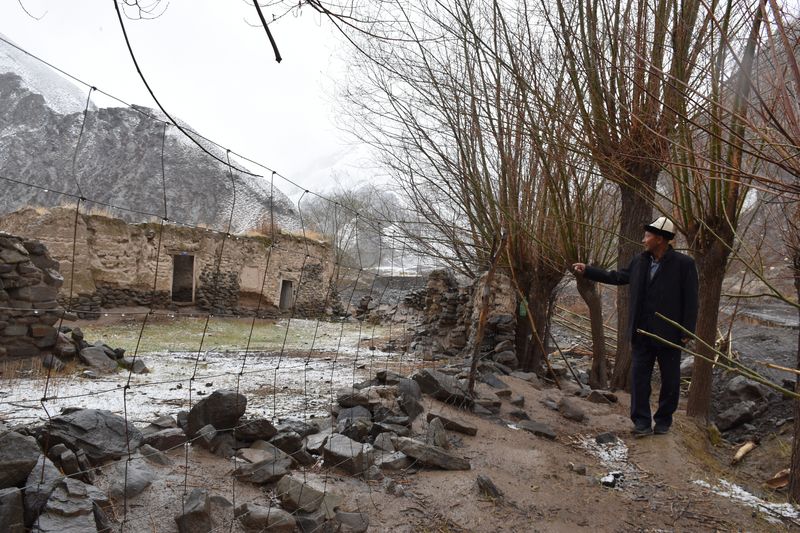
Usman Tomur shows the first site of the village administration in the county of Akto, northwest China's Xinjiang Uygur Autonomous Region, April 20, 2020. (Xinhua/Gao Han)
2,580 METERS
Gazing up from the foot of the mountain, it is easy to understand how Hongxin earned its former name "Tarkeqik," which means narrow and small in Kirgiz. Starting from an opening in the mountains on the Pamir Plateau, the settlement reaches deep into the mountains. The deeper it gets, the narrower it becomes.
The village had been home to the Kirgiz community for as long as anyone could remember. In 1956, the governing seat was established in a former residence at altitude of 2,580 meters.
"At that time 270 herders from 70 households lived here," said Usman Tomur, 62. Having held the position of village chief for 22 years, Usman knows Hongxin like the back of his hand.
Life was never easy here, with thin air and scarce arable land. The idea of relocation was easily sown.
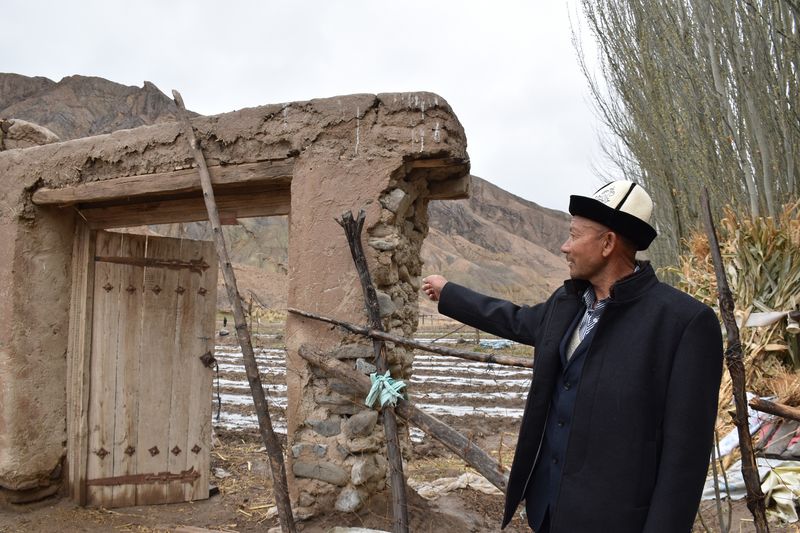
Usman Tomur shows the gate of the second site of the village administration, April 20, 2020. (Xinhua/Gao Han)
2,340 METERS
Just two years after the governing seat was established, the new village administration moved five kilometers down the mountain to an altitude of 2,340 meters.
"Our population began to increase, so the area became too small," Usman recalled.
This move down the mountain was not to be the last. The village kept moving.
The former administration office at the altitude of 2,340 meters is now a corn field. All that remains is the office gate.
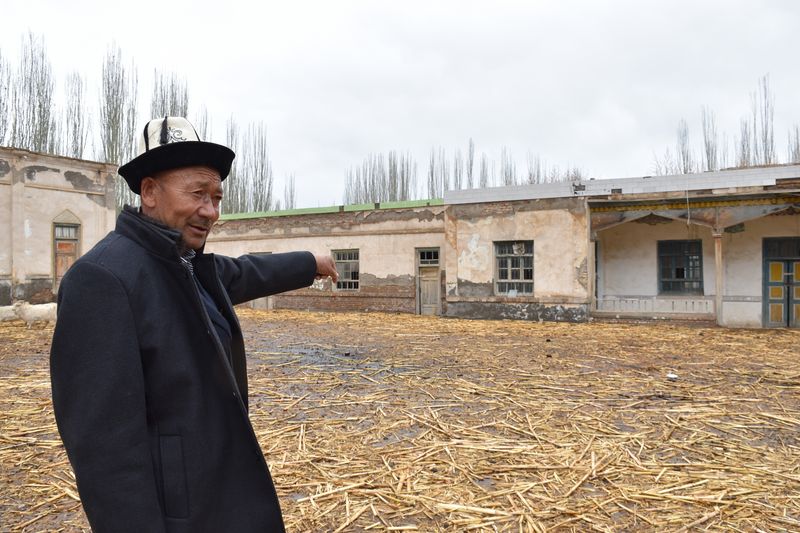
Usman Tomur shows the third site of the village administration, April 20, 2020. (Xinhua/Gao Han)
2,020 METERS
Just half a year later the community moved to an altitude of 2,020 meters.
People settled here, focusing on improving their livelihood. The population had increased to 1,000 in 2015. With roads built, some villagers were able to leave the mountains.
The current settlement was not without its problems, such as the occasional floods.
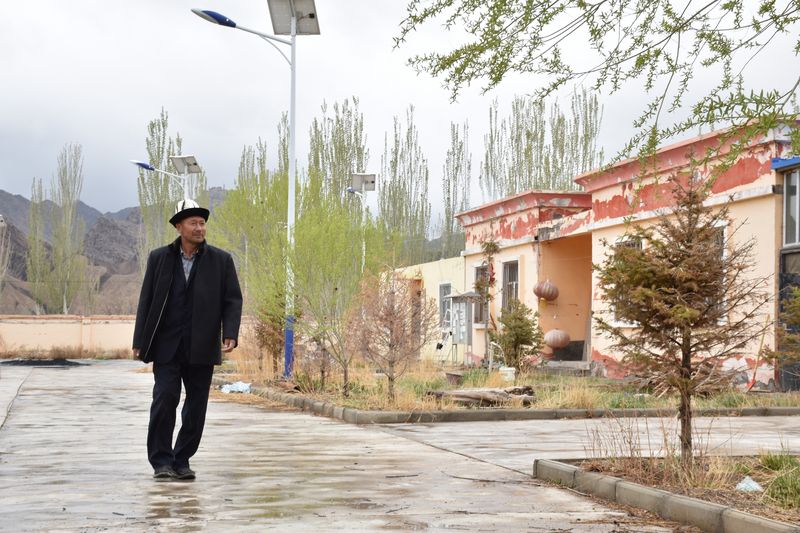
Usman Tomur shows the fourth site of the village administration, April 20, 2020. (Xinhua/Gao Han)
2,000 METERS
In 2015, villagers resettled on a stretch of open ground in a valley at an altitude of 2,000 meters. A community center and a clinic were built.
As a part of the country's poverty reduction campaign, new homes with red roofs and white walls were built for underprivileged families to replace their mud brick houses. Herders moved into what they called 50 Houses, 36 Houses and 48 Houses -- three relocation communities that took on the number of residencies.
"These houses are safe and comfortable," said Usman.
Herders finally got access to tap water and Internet. Some bought refrigerators.
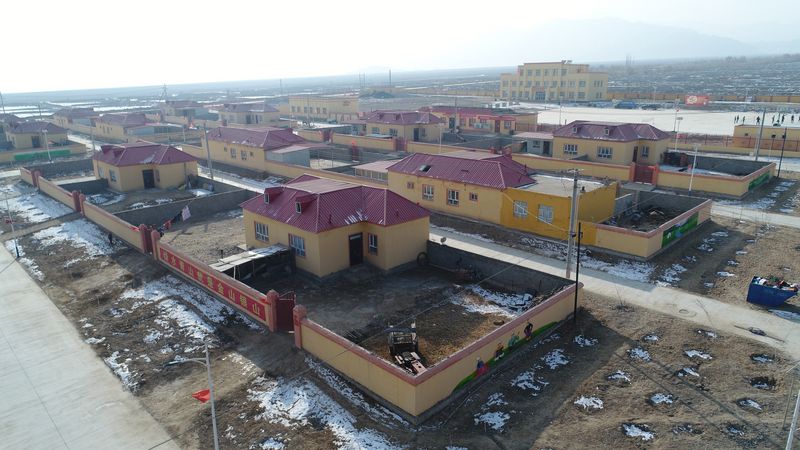
An aerial view of the new settlement of Hongxin, April 20, 2020 (Xinhua/Huang Kai)
1,810 METERS
In 2018, the village administration moved their office near the herders' new home at an altitude of 1,810 meters. A former barren patch of land became a square with a community center, a clinic, a supermarket, restaurants and a kindergarten.
At the end of the year, 164 families were removed from the list of households living under the poverty line, the last families in the area to have been classed as poor. The village name was changed from Tarkeqik to Hongxin, meaning a happy, modern village.
"We have sent more than 80 children to college," said Usman.
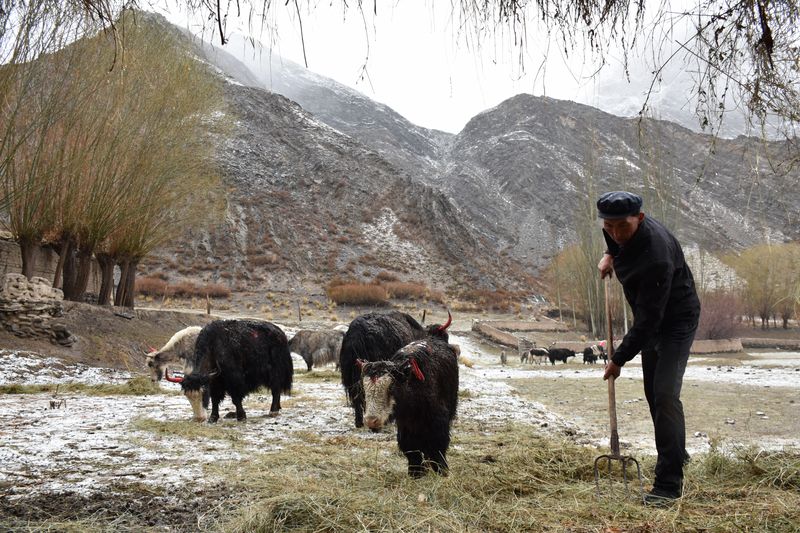
Hesen Tohti's yaks graze on the pasture, April 20, 2020. (Xinhua/Gao Han)
Herder Hesen Tohti's flock is bigger than any of his predecessors -- 260 sheep and 35 yaks, and he earns good money. Just last year, he put down the horse tack for good and bought a four-wheel-drive vehicle. Every morning, with music blasting out of his car speakers, he sets off to pastures.
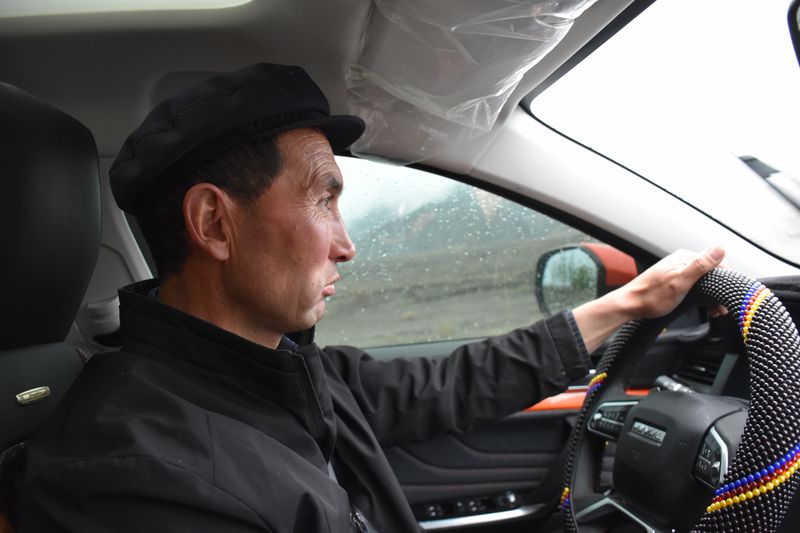
Hesen Tohti drives his new car to the pasture, April 20, 2020. (Xinhua/Gao Han)
Some other villagers have ended their nomadic life to become farmers and workers.
"Over the past half a century, the lower we moved, the higher income we earned, and the better our lives became," said Jarhen Ahati, a village official.
He said that they plan to renovate the five relocated office sites into a village history museum to commemorate the development of Hongxin.
(Xinhua reporters Gao Han and Dong Yalei in Xinjiang also contributed to the story) ■
