SHARM EL-SHEIKH, Egypt, Feb. 24 (Xinhua) -- European Council President Donald Tusk said Sunday that Arab and European leaders must cooperate to face the common challenges and seize the real opportunities that geography, common history and similar interests have created.
"These are objective reasons why we have to be closer. Our neighbourhood is something real, which means that being closer is in fact not a choice but a must," Tusk addressed the first League of Arab States (LAS)-EU Summit held in Egypt's Sharm el-Sheikh.
In a time of growing tension and unpredictability, Tusk said, Arab and European leaders need to work together to create long-term stability, and to guarantee our citizens the peace and prosperity they deserve.
Tusk added that leaders from the two sides can cooperate in funding education, reducing employment, encouraging investment and boosting trade.
Fostering intercultural dialogue, empowering a vibrant civil society and prioritizing education and opportunity can help create peaceful and stable societies, less susceptible to the messages of violent extremism, and counter balance the negative impact that populist narratives can have on the resilience of our societies, he added.
Speaking about migration, Tusk urged collaboration between countries of origin, transit and destination to break the business model of smugglers and traffickers.
He stressed that joint work is required to address the root causes of migration and displacement, stop irregular migration, and facilitate returns, readmission and reintegration.
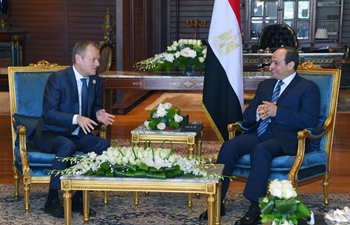
More than 50 European and Arab countries participated in the LAS-EU Summit, which was co-chaired by Tusk and Egyptian President Abdel-Fattah al-Sisi.
Leaders from both sides will seek to strengthen ties and address a wide range of issues and common challenges, such as multilateralism, trade, investment, migration, security and regional situation.
The summit will also provide an opportunity for leaders to discuss the latest developments in the region, such as the Middle East peace process and the situations in Yemen, Libya and Syria.