




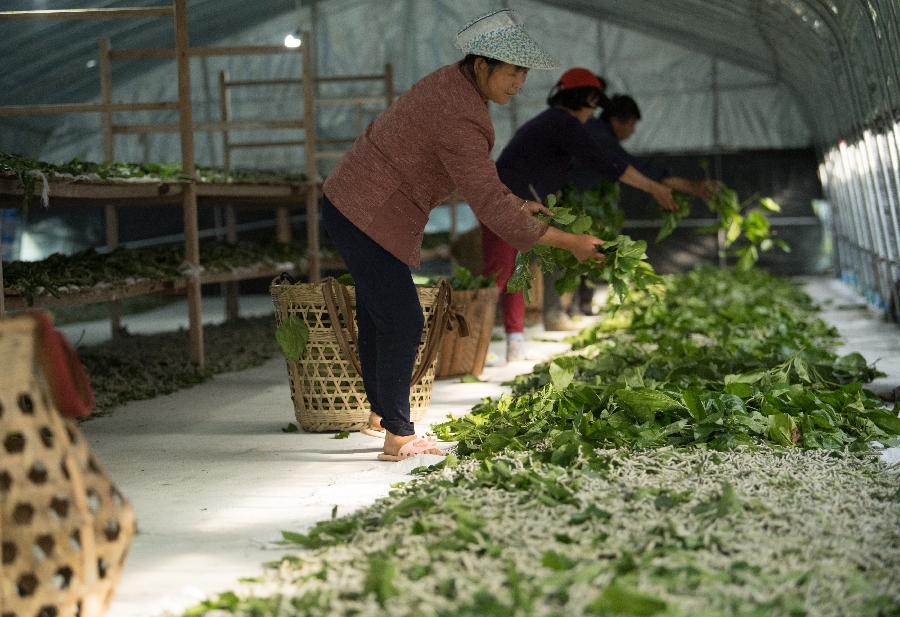
Workers feed silkworms with mulberry leaves at a silkworm breeding base of Cathaya Group in Wangcun Village of Chun'an County, east China's Zhejiang Province, May 9, 2018. (Xinhua)
BEIJING, March 5 (Xinhua) -- Chinese scientists have found that a key gene of silkworms is related to its feeding preference for mulberry leaves, providing possible new strategies for silkworm rearing.
Domesticated silkworms are the foundation of sericulture. Silkworms predominately feeds on mulberry leaves, but the genetic basis for its feeding preference is unknown.
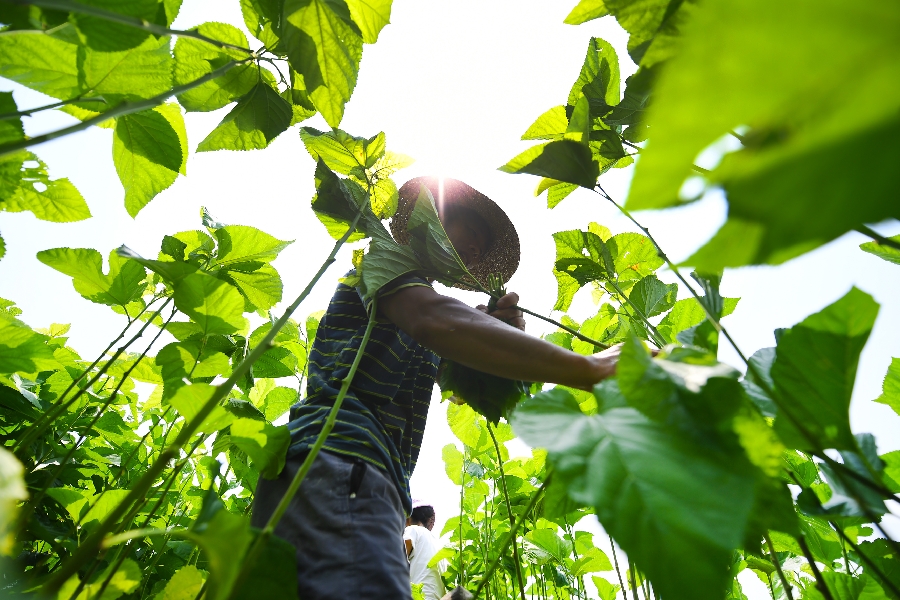
A villager picks mulberry leaves at Duihe Village of Fengshan Town in Liucheng County, south China's Guangxi Zhuang Autonomous Region, Aug. 21, 2018. (Xinhua)
Scientists from the Center for Excellence in Molecular Plant Sciences/Institute of Plant Physiology and Ecology, the Chinese Academy of Sciences, have conducted gene analyses and found that the gene GR66 is a major factor affecting the feeding preference of the silkworm. A gene mutation in silkworms can change their eating habits.
Results showed that GR66 mutant larvae acquired new feeding activity, exhibiting the ability to feed on a number of plant species in addition to mulberry leaves, including fresh fruits and grain seeds.
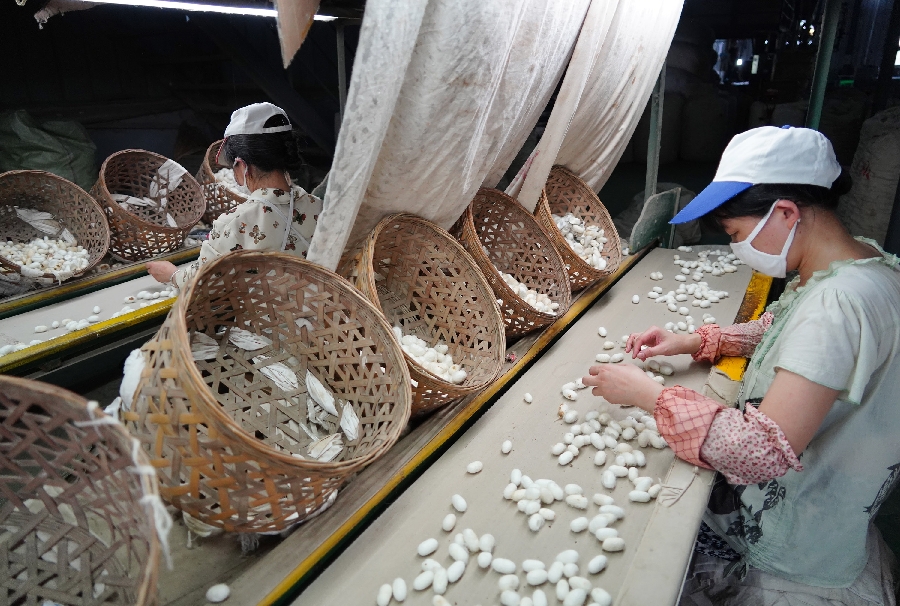
Workers pick silkworm cocoons at a silk company in Shiquan County, northwest China's Shaanxi Province, July 19, 2018. (Xinhua)
According to Tan Anjiang, one of the researchers, mulberry leaves have been used as the only food source for mass rearing of silkworm for thousands of years, however, limited supply of mulberry leaves has created a bottleneck in the sericulture industry.
The research provides a promising approach for developing alternative food sources for the mass rearing of silkworms, Tan said.
"The research will also provide insights into the mechanisms underlying insect feeding behavior and insect-plant interactions, facilitating the development of novel strategies for pest management," Tan added.
The research was published in the journal PLOS Biology. Enditem
