SEOUL, Oct. 1 (Xinhua) -- South Korea's consumer price posted the first-ever fall last month on lower prices for farm goods and oil products as well as the government's welfare policies, a government report showed Tuesday.
The consumer price index stood at 105.20 in September, down 0.4 percent from a year earlier, according to Statistics Korea. It was the first-ever decline since the statistical office began compiling the data in 1965.
In August, the index shed 0.038 percent from a year earlier, but it was officially recorded as a "zero" change because the official figure is rounded to one decimal place.
The consumer price inflation hovered below 1 percent for the ninth straight month, since it retreated to 0.8 percent in January.
The negative inflation was mainly affected by the government's welfare policies, such as an expanded free education for high school students and a widened coverage of national health insurance.
Public services price dipped 1.2 percent in September from a year earlier. Tuition fee for high school students dived 36.2 percent, with school lunch costs plunging 57.8 percent on the launch of free school meal in all schools of the Gyeonggi province.
Medical checkup costs shrank 10.3 percent last month, with the payment for nursery facilities skidding 4.3 percent.
Lower prices for farm goods and oil products also contributed to the prolonged trend of low inflation.
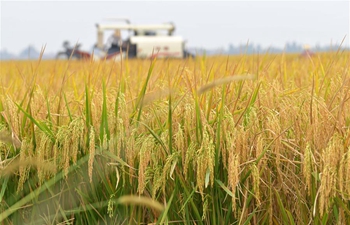
Price for agricultural, livestock and fishery products declined 8.2 percent in September from a year earlier, dragging down the overall headline inflation by 0.70 percentage points.
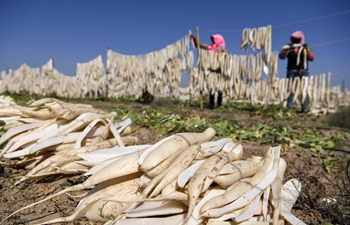
Vegetable price tumbled 21.3 percent, with those for white radish, lettuce, green onion, tomato and napa cabbage all sliding in double figures.
The confirmed cases of African swine fever were reported here in recent weeks, but pork price slipped 3.7 percent last month as the deadly animal disease seemed to have halted spreading.
Oil product price went down 5.6 percent, pulling down last month's overall inflation by 0.26 percentage point. Prices for gasoline and diesel moved down 6.3 percent and 3.7 percent each.
Despite the consumer price decline, the government did not see it as signs of deflation, citing inflation expectations that stayed around 2 percent, the rising asset price and the still growing economy.
The low inflation reduced pressure on the Bank of Korea (BOK), which lowered its target rate by 25 basis points to 1.50 percent in July. Expectations ran high for the BOK to cut it further by the end of this year.
Demand-side inflationary pressure was also low. The core price index, which excludes volatile costs for agricultural and oil products, rose 0.6 percent in September from a year earlier, the lowest in 20 years.
The OECD-method core price, which rules out volatile food and energy costs, added 0.5 percent in the month, the lowest since December 1999.
The so-called livelihood cost index, which measures the price for major daily necessities, slipped 0.9 percent in the month.
The fresh food index, which gauges costs for fish, shellfish, vegetable and fruit, plunged 15.3 percent in September, the lowest since October 2008.